










Scarlet Avens (Geum cocineum, Plate 12) by Pierre Joseph Redouté, 1827
Authentic artwork
The artwork we print is faithfully restored from the original source - usually a museum, auction house or private collection.
We never replace, redraw or invent the artist’s work using generative AI.
Restored in our workshop from the original 1827 artwork and printed to museum-grade archival standards. Full description
The Collector’s Offer
Choose two eligible works and receive 25% off both. You can mix and match both maps and art.
No code is required. The offer is applied automatically.
Full terms and conditions
The Collector’s Offer applies to eligible works in standard made-to-order configurations. Bespoke sizes, personalised designs and commissioned work are excluded. Products with “personalised” or “custom” in their name are generally excluded.
The offer is administered as two separate automatic discounts: one for smaller formats and one for larger formats. To qualify, you must purchase two eligible works within the same format group. Maps and art prints may be mixed and matched within each group.
For example, two eligible A4 or 8 × 10 in prints qualify for 25% off both. One smaller-format print and one larger-format work do not qualify together, as items from different format groups cannot be combined to meet the two-item requirement.
No discount code is required. Any qualifying discount is applied automatically in your basket and at checkout.
 Restored in London • Printed and framed in the EU

Authentic artwork
The artwork we print is faithfully restored from the original source - usually a museum, auction house or private collection.
We never replace, redraw or invent the artist’s work using generative AI.
Restored from the original 1827 artwork and printed to museum-grade archival standards. Full description
Choose your size
Choose your finish


(More info)
Gift message & custom finish

If you want to add a gift message, or a finish (jigsaw, aluminium board, etc.) that is not available here, please request it in the "order note" when you check out.
Every order is custom made, so if you need the size adjusted slightly, or printed on an unusual material, just let us know. We've done thousands of custom orders over the years, so there's (almost) nothing we can't manage.
You can also contact us before you order, if you prefer!
- Made in the EU for fast, safe delivery
- Arrives perfect - or we replace it
-
Christmas delivery & gifting Christmas delivery & gifting
Beat the Christmas rush—order early.
Delivery options
Enjoy free standard delivery to anywhere in the world. Free delivery usually arrives in 3 business days. Express or and next-day options are available at the checkout.
Personalised pieces need time for design and proof approval before printing. More delivery info.
Send it straight to them
Simply enter the recipient’s delivery address at checkout. Add a gift message in the order notes and we’ll print it on a branded card. We don’t include prices in the parcel.
Time to choose with confidence
Standard orders can be returned or exchanged within 90 days of delivery. Personalised and custom-made pieces are generally excluded from change-of-mind returns. See our returns policy.
Arrives perfect—or we replace it
If your order arrives damaged, send us a few photos and we’ll arrange a replacement free of charge.
Have a question about your gift? Contact the workshop.
- Need help ordering?
Chosen by collectors, designers and gift buyers
8,000+ five-star reviews


Pierre-Joseph Redouté’s 1827 study of scarlet avens (Geum cocineum) appeared as plate 12 in Choix des plus belles fleurs. The plant rises...
Continue readingPierre-Joseph Redouté’s 1827 study of scarlet avens (Geum cocineum) appeared as plate 12 in Choix des plus belles fleurs. The plant rises in a gently asymmetrical cluster, its vivid red flowers opening among yellow buds and fresh green foliage. Rather than presenting a single bloom in isolation, Redouté records several stages of growth at once: tightly closed buds, partially unfurled petals and broad, mature flowers gathered around finely observed centres. Against the restrained cream ground, each stem and serrated leaf remains exceptionally clear.
Redouté was among the most admired botanical artists of the early nineteenth century, celebrated for reconciling scientific description with unusual delicacy. Often called the “Raphael of flowers”, he helped establish a visual language in which botanical specimens could be studied accurately while also being appreciated as elegant compositions. Choix des plus belles fleurs belongs to this tradition of natural-history publishing, created at a time when carefully observed flower studies served both educational and decorative purposes.
A closer look
The largest flower occupies the central foreground, its rounded arrangement of overlapping petals held around a small yellow centre. The red is not uniform: richer colour gathers towards the inner folds, while the edges soften into paler, warmer tones. This subtle gradation gives the petals volume without sacrificing the clarity of their outlines. Further blooms rise at the upper right, varied in scale and degree of openness so that the grouping feels grown rather than geometrically arranged.
At the upper left, a compact gathering of yellow buds provides a sharp chromatic counterpoint to the scarlet flowers. A smaller yellow bloom appears just below the centre, partially enclosed by surrounding stems and petals. These touches of yellow guide the eye through the composition, linking the flower centres with the unopened buds and preventing the dominant red from becoming visually heavy.
The foliage becomes particularly detailed towards the lower right. Individual leaf veins branch through soft green surfaces, while sharply serrated edges lend the plant a precise, tactile character. Stems cross and separate with considerable economy, creating a shallow sense of depth across the otherwise open page. Beneath the specimen, the French name “Bénoîte écarlate” is paired with the botanical designation “Geum cocineum”, while Redouté’s name appears at the lower left. The lettering is discreetly placed, preserving the generous negative space around the plant.
Context and significance
Redouté’s reputation rested on precisely this balance between close observation and compositional refinement. His career unfolded in Paris across a period of profound political change, yet his sustained subject was the cultivated and collected plant. Working within a flourishing culture of botanical study, he transformed the conventions of specimen illustration into images distinguished by spaciousness, tonal subtlety and an almost portrait-like attention to individual flowers.
This plate is especially revealing in the way it makes botanical information visually pleasurable. The different states of the blooms clarify the plant’s structure and development, while the restrained background and carefully paced diagonals give the cluster an independent decorative rhythm. The result is neither a crowded bouquet nor a dry diagram, but a lucid study in which colour, growth and classification are held in unusually graceful equilibrium.
Choosing the right size and finish
Artwork can feel intimate at smaller sizes and dramatically more architectural at larger ones. Use the room preview, model image and size guide to see how the proportions and scale will work in your space.
If you need an exact size, specialist framing or help planning a larger display, ask our workshop for advice.
The model in the listing images is holding the 18x24in (45x60cm) version of this art print.
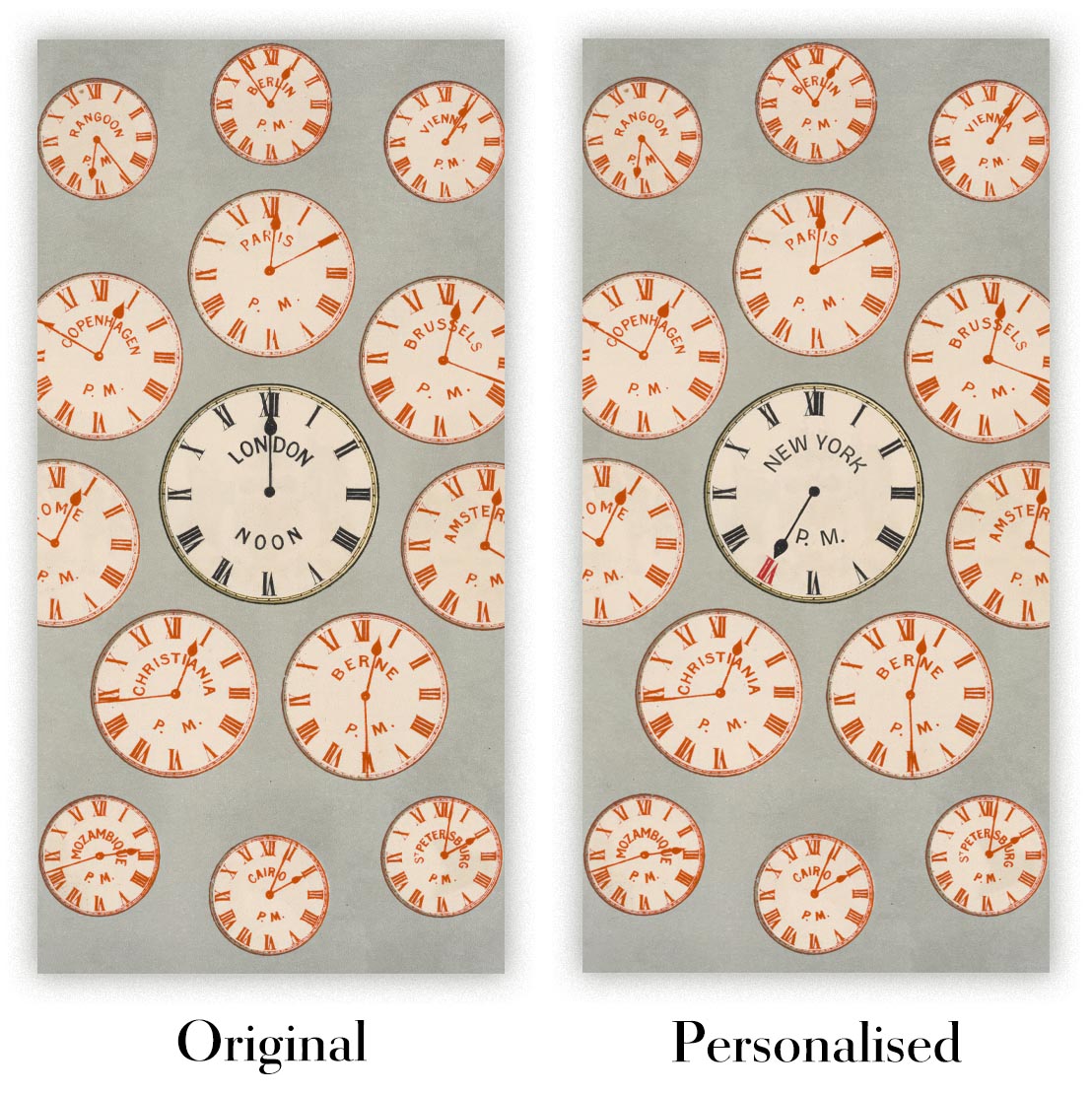
Where personalisation is available, you can add a short title or dedication, or one considered visual detail. See examples of personalised artwork.
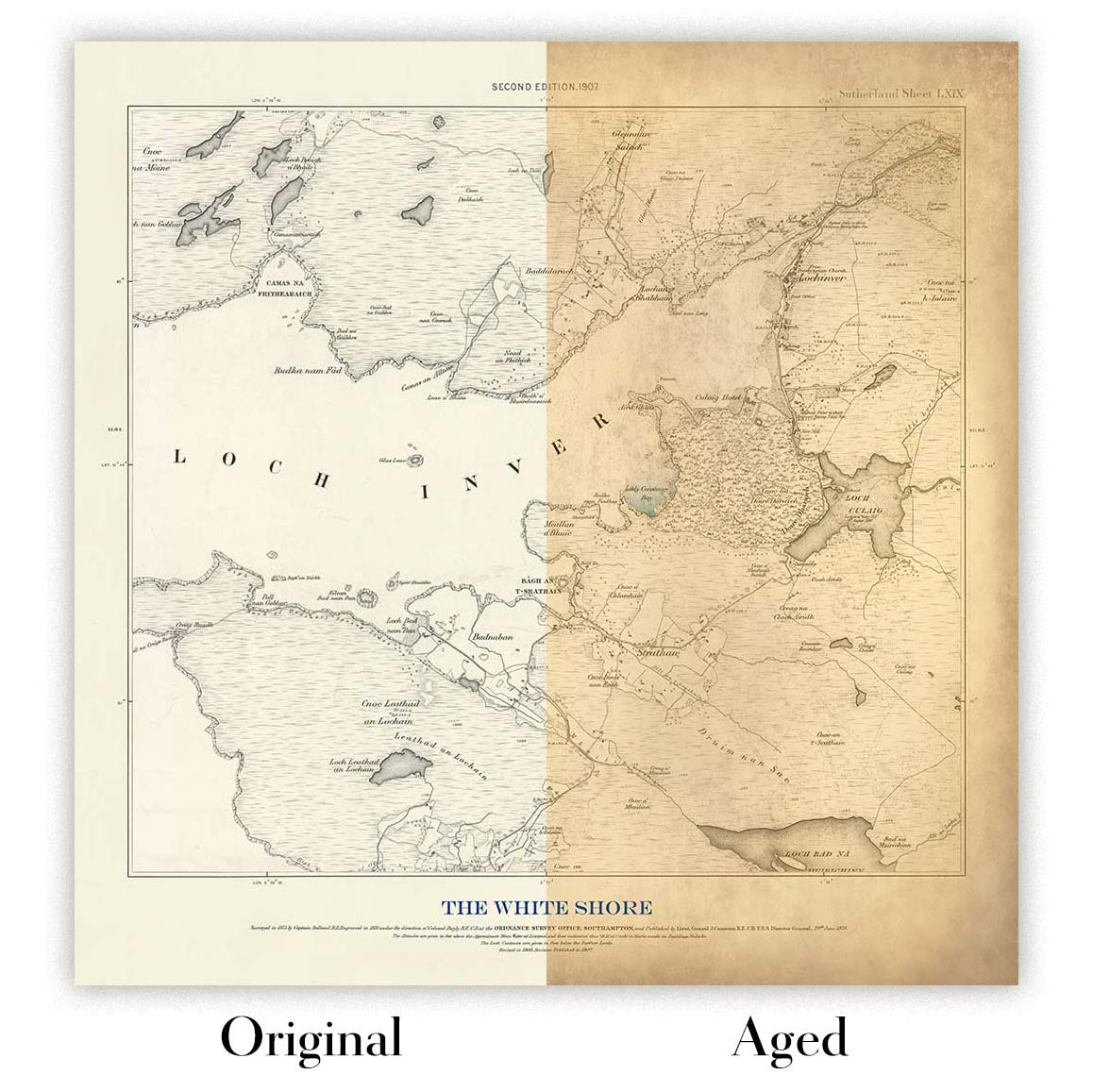
Choose Original to retain the colour and character of the source artwork, or Aged for a warmer, more antique appearance. See examples of our Aged artwork.
Every piece is produced to archival standards using fade-resistant pigment inks on acid-free matte art paper. Choose an art print, framed art print or framed canvas using the finish options above.
Framed art prints use crystal-clear optical acrylic for excellent clarity, lower weight and safer delivery than glass. Each piece arrives professionally framed and ready to hang.
Selected artworks can be produced at statement sizes up to 3 metres (10ft). Custom sizing and specialist framing are also available. If the exact option you need is not listed, contact our workshop.
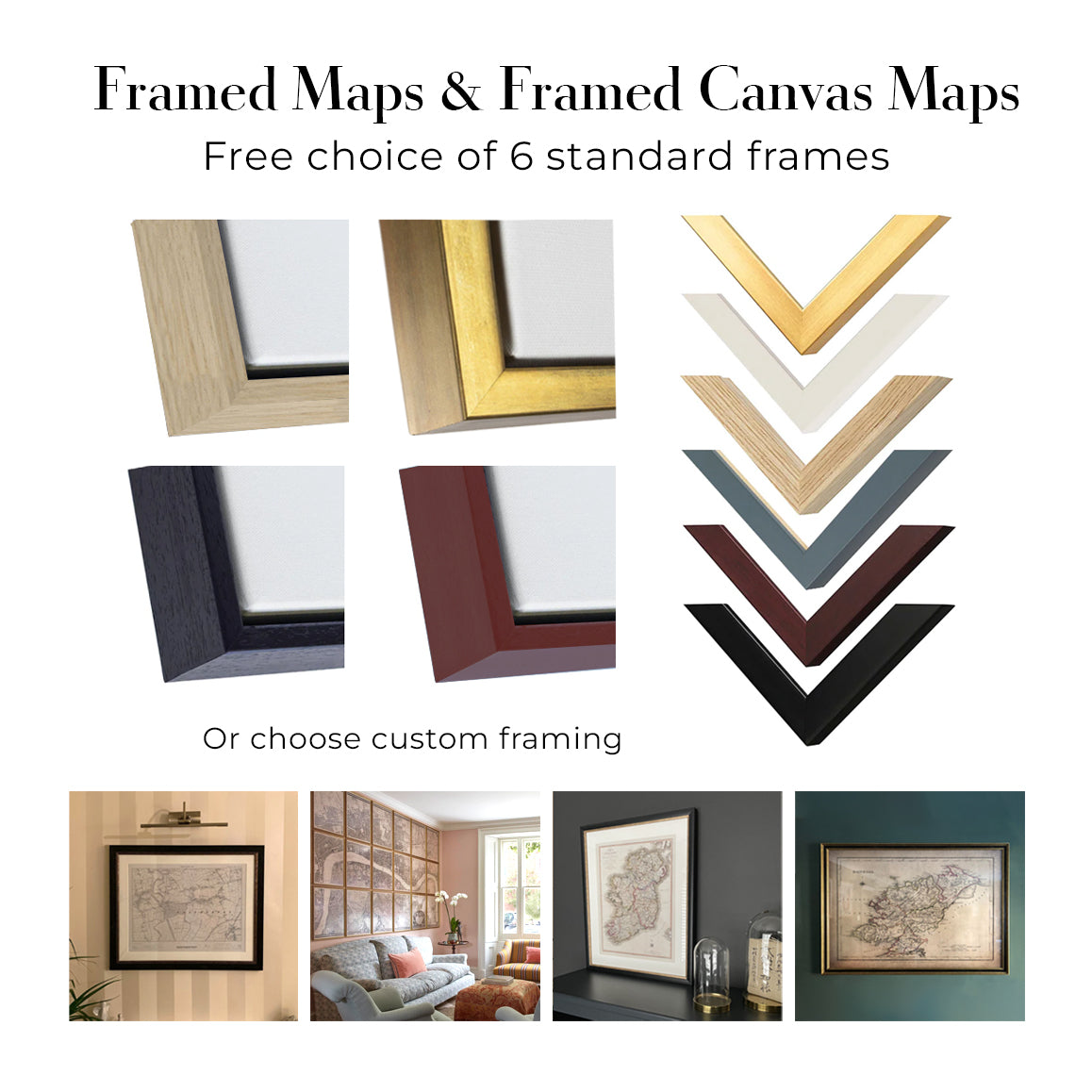
This artwork is also available as a float framed canvas, sometimes known as a shadow gap framed canvas or canvas floater. The work is printed on artist's cotton canvas and then stretched over a handmade box frame. We then "float" the canvas inside a wooden frame, which is available in a range of colours (black, dark brown, oak, antique gold and white). This is a wonderful way to present an art print without glazing in front. See some examples of float framed canvas art and explore the differences between my different finishes.
Pierre-Joseph Redouté’s 1827 study of scarlet avens (Geum cocineum) appeared as plate 12 in Choix des plus belles fleurs. The plant rises in a gently asymmetrical cluster, its vivid red flowers opening among yellow buds and fresh green foliage. Rather than presenting a single bloom in isolation, Redouté records several stages of growth at once: tightly closed buds, partially unfurled petals and broad, mature flowers gathered around finely observed centres. Against the restrained cream ground, each stem and serrated leaf remains exceptionally clear.
Redouté was among the most admired botanical artists of the early nineteenth century, celebrated for reconciling scientific description with unusual delicacy. Often called the “Raphael of flowers”, he helped establish a visual language in which botanical specimens could be studied accurately while also being appreciated as elegant compositions. Choix des plus belles fleurs belongs to this tradition of natural-history publishing, created at a time when carefully observed flower studies served both educational and decorative purposes.
A closer look
The largest flower occupies the central foreground, its rounded arrangement of overlapping petals held around a small yellow centre. The red is not uniform: richer colour gathers towards the inner folds, while the edges soften into paler, warmer tones. This subtle gradation gives the petals volume without sacrificing the clarity of their outlines. Further blooms rise at the upper right, varied in scale and degree of openness so that the grouping feels grown rather than geometrically arranged.
At the upper left, a compact gathering of yellow buds provides a sharp chromatic counterpoint to the scarlet flowers. A smaller yellow bloom appears just below the centre, partially enclosed by surrounding stems and petals. These touches of yellow guide the eye through the composition, linking the flower centres with the unopened buds and preventing the dominant red from becoming visually heavy.
The foliage becomes particularly detailed towards the lower right. Individual leaf veins branch through soft green surfaces, while sharply serrated edges lend the plant a precise, tactile character. Stems cross and separate with considerable economy, creating a shallow sense of depth across the otherwise open page. Beneath the specimen, the French name “Bénoîte écarlate” is paired with the botanical designation “Geum cocineum”, while Redouté’s name appears at the lower left. The lettering is discreetly placed, preserving the generous negative space around the plant.
Context and significance
Redouté’s reputation rested on precisely this balance between close observation and compositional refinement. His career unfolded in Paris across a period of profound political change, yet his sustained subject was the cultivated and collected plant. Working within a flourishing culture of botanical study, he transformed the conventions of specimen illustration into images distinguished by spaciousness, tonal subtlety and an almost portrait-like attention to individual flowers.
This plate is especially revealing in the way it makes botanical information visually pleasurable. The different states of the blooms clarify the plant’s structure and development, while the restrained background and carefully paced diagonals give the cluster an independent decorative rhythm. The result is neither a crowded bouquet nor a dry diagram, but a lucid study in which colour, growth and classification are held in unusually graceful equilibrium.
Choosing the right size and finish
Artwork can feel intimate at smaller sizes and dramatically more architectural at larger ones. Use the room preview, model image and size guide to see how the proportions and scale will work in your space.
If you need an exact size, specialist framing or help planning a larger display, ask our workshop for advice.
The model in the listing images is holding the 18x24in (45x60cm) version of this art print.
Where personalisation is available, you can add a short title or dedication, or one considered visual detail. See examples of personalised artwork.
Choose Original to retain the colour and character of the source artwork, or Aged for a warmer, more antique appearance. See examples of our Aged artwork.
Every piece is produced to archival standards using fade-resistant pigment inks on acid-free matte art paper. Choose an art print, framed art print or framed canvas using the finish options above.
Framed art prints use crystal-clear optical acrylic for excellent clarity, lower weight and safer delivery than glass. Each piece arrives professionally framed and ready to hang.
Selected artworks can be produced at statement sizes up to 3 metres (10ft). Custom sizing and specialist framing are also available. If the exact option you need is not listed, contact our workshop.
This artwork is also available as a float framed canvas, sometimes known as a shadow gap framed canvas or canvas floater. The work is printed on artist's cotton canvas and then stretched over a handmade box frame. We then "float" the canvas inside a wooden frame, which is available in a range of colours (black, dark brown, oak, antique gold and white). This is a wonderful way to present an art print without glazing in front. See some examples of float framed canvas art and explore the differences between my different finishes.
Many of our maps and art prints are chosen as thoughtful gifts for homes, offices, studies and meaningful places.
Choose a framed option for the easiest ready-to-hang gift, or choose an unframed print if the recipient may prefer to select their own frame.
We make orders locally in 24 countries around the world, so gifts can often be produced close to the recipient. This helps them arrive faster, travel more safely, and avoid customs or import duty surprises.
- We can deliver directly to the recipient
- Framed pieces arrive ready to hang
- Unframed prints are carefully packed in a strong protective tube
- Almost every order is made locally, for faster, safer gifting
- 90-day returns give the recipient time to decide
If you are not sure what to choose, please contact us. We can help you pick the right map, size, finish or delivery option.
Most orders are made locally and delivered in around 2–3 working days, depending on the product, size and destination.
We print and frame maps and artwork in 24 countries around the world, so your order is usually made close to you or your recipient. That means faster delivery, less time in transit, and no customs or import duty surprises.
Personalised and customised pieces usually take an extra 1–2 working days, because we prepare your design and send it to you for approval before printing.
Very large framed orders can take a little longer, as they need extra care in production and delivery.
Every order is carefully packaged: unframed prints are sent in a strong protective tube, while framed pieces are securely packed with protective materials around the frame.
If you need your order by a particular date, please contact us before ordering. We’ll check the best production route and delivery option for your location.
Express delivery is available at checkout for most countries. Next-day delivery is available in the UK, US, Singapore and the UAE.
Your order is covered by our 90-day returns policy and 10-year guarantee.
Our standard frame is a gallery-style black ash hardwood frame, with a simple, modern look. It is approximately 20mm (0.8in) wide. You can also view some lovely customer photos of framed maps and art.
We use super-clear acrylic glazing, also known as Perspex or Acrylite, instead of traditional glass. It is lighter, safer, and has lower reflectivity, giving the artwork a clearer, cleaner appearance.
Six standard frame colours are available at no extra cost: black, dark brown, dark grey, oak, white, and antique gold. Custom framing and mounting/matting is also available for customers looking for something more specific.
Most maps, art prints, and illustrations are also available as a framed canvas. We use matte cotton canvas, stretch it over a sustainably sourced wooden box frame, and then float the piece within a wooden outer frame. The finished result is beautifully presented, with no glazing between you and the artwork.
All frames are supplied ready to hang, with either string or brackets fitted to the back. Very large frames will include heavy-duty hanging plates and/or a mounting baton. If you have any questions, please get in touch.
We can also supply old maps and artwork on canvas, foam board, cotton rag, and other materials.
If you would prefer to frame your map or artwork yourself, please read our size guide before ordering.
We work with interior designers, hospitality businesses, property professionals, offices and corporate buyers on individual pieces and larger coordinated projects.
This artwork can be adapted for a particular wall, room or project, and our workshop can help coordinate the dimensions, material and framing before production.
- Exact, oversized and made-to-measure dimensions
- Custom framing, mounting and alternative materials
- Coordinated pieces for several rooms or locations
- Art personalisation, to adjust the colour and style of the piece
- Art and framing guidance from our workshop
- Local production for projects around the world
Every restored art print begins with the original artist’s work—never an AI-generated replacement.
Our London studio works from carefully selected source material from museums, libraries, archives and private collections. We restore age-related damage, faded colour and imperfect reproduction while preserving the artist’s composition, brushwork, line, texture and period character.
We do not use generative AI to redraw, reinterpret or invent the artwork. Digital restoration is used only to recover and reproduce the original work as faithfully as possible.
Once restored, the master artwork is prepared for your chosen size and finish. Your piece is then printed and, where selected, framed close to its delivery destination.
Our giclée art prints use acid-free 200gsm archival matte paper and fade-resistant pigment inks for a rich, museum-quality finish. Framed art prints use crystal-clear optical acrylic and arrive ready to hang.
Framed canvas and specialist cotton-rag editions are also available. Learn more about our materials and finishes.
We’ve been restoring and producing maps and art prints since 1984, and we stand behind every piece.
Every order is covered by our 10-year guarantee and damage-free delivery guarantee. If your piece arrives damaged, we’ll replace or remake it free of charge. If anything else isn’t right, contact our workshop team and we’ll put it right promptly.
See our returns and refund policy for full details.


