














Alte Karte von Palästina zur Zeit Jesu von Foster, 1912: Jerusalem- und Herodes-Tempel-Ansichten; Jordan–Totes Meer; Relief-Hachuren
In unserer Londoner Werkstatt aus der Originalkarte von 1912 restauriert und in Museumsqualität gedruckt. Vollständige Beschreibung
Das Sammlerangebot
Wählen Sie zwei berechtigte Werke und erhalten Sie auf beide 20 % Rabatt. Wählen Sie drei, und das günstigste ist kostenlos – eine maximale Ersparnis von 33 %.
Kombinieren Sie berechtigte Standardkarten und Kunstdrucke nach Belieben. Kein Code erforderlich; das Angebot wird an der Kasse automatisch angewendet.
Standardmäßige Konfigurationen nach Maßanfertigung sind inbegriffen. Maßgeschneiderte Größen, personalisierte Entwürfe und Auftragsarbeiten sind ausgeschlossen.
Benötigen Sie die Lieferung an unterschiedliche Adressen? Kontaktieren Sie uns vor der Bestellung.Das Sammlerangebot
Wählen Sie zwei berechtigte Werke und erhalten Sie auf beide 20 % Rabatt. Wählen Sie drei, und das günstigste ist kostenlos – eine maximale Ersparnis von 33 %.
Kombinieren Sie berechtigte Standardkarten und Kunstdrucke nach Belieben. Kein Code erforderlich; das Angebot wird an der Kasse automatisch angewendet.
Standardmäßige Konfigurationen nach Maßanfertigung sind inbegriffen. Maßgeschneiderte Größen, personalisierte Entwürfe und Auftragsarbeiten sind ausgeschlossen.
Benötigen Sie die Lieferung an unterschiedliche Adressen? Kontaktieren Sie uns vor der Bestellung. In London restauriert • In der EU gedruckt und gerahmt

Aus der Originalkarte von 1912 restauriert und in Museumsqualität gedruckt. Vollständige Beschreibung
Größe wählen
Ausführung wählen


(Mehr Infos)
Geschenkmitteilung & individuelle Ausführung

Wenn Sie eine Geschenkmitteilung oder eine Ausführung (Puzzle, Aluminiumplatte usw.) hinzufügen möchten, die hier nicht verfügbar ist, geben Sie dies bitte in der "Bestellnotiz" beim Checkout an.
Jede Bestellung wird individuell angefertigt. Wenn Sie die Größe leicht anpassen oder auf einem ungewöhnlichen Material drucken lassen möchten, lassen Sie es uns einfach wissen. Wir haben im Laufe der Jahre Tausende von individuellen Bestellungen bearbeitet, daher gibt es (fast) nichts, was wir nicht bewältigen können.
Sie können uns auch kontaktieren, bevor Sie bestellen, wenn Sie möchten!
Ein Stück Geschichte für Ihr Zuhause
Über 8.000 5-Sterne-Bewertungen


Charles Fosters Meisterwerk von 1912 mit dem Titel „Palestine in the time of Jesus, 4 B.C. - 30 A.D. (including the period...
WeiterlesenCharles Fosters Meisterwerk von 1912 mit dem Titel „Palestine in the time of Jesus, 4 B.C. - 30 A.D. (including the period of Herod, 40 - 4 B.C.)“ verdichtet die biblische Geographie zu einer klaren, gelehrten Karte des Landes, das den Rahmen des Neuen Testaments bildet. Foster fügt die Regionen Galiläa, Samarien, Judäa, Idumäa und die hellenisierten Dekapolis zu einer stimmigen Bühne zusammen, wobei sich der Jordan vom See Genezareth bis zum mineralischen Spiegel des Toten Meeres durch das Land zieht. Seine Kartographie stellt den historischen Kontext in den Vordergrund: Wichtige Städte — Jerusalem, Bethlehem, Nazareth, Jericho — sind durch Anmerkungen verankert, die Gelände und Text miteinander verbinden, während zwei maßgebliche Beilagen — Jerusalem in römischer Zeit und Herodes’ Tempel — den Betrachter in das urbane und sakrale Herz des Spätzeitlichen Zweiten Tempels führen.
Mit disziplinierten Hachuren dargestellt, ist das Relief mehr als bloßer Hintergrund; es ist Protagonist. Die judäischen Hochländer steigen in dichten, zweckmäßigen Strichen an, deren steile Zugänge den mühevollen Aufstieg von Jericho nach Jerusalem und die verteidigungsfähige Lage der Hügelstädte erklären. Breitere, lockerere Schattierungen modellieren die sanften Rücken Samarien und die galiläischen Hochflächen, wo wandernde Predigt eng verbundene Dörfer fand. Im Osten gähnt der Jordan-Graben, ein abgesenkter Korridor, der seit der Antike Bewegung lenkt und in dem nüchternen Becken des Toten Meeres endet. Indem Foster Gefälle und Exposition mit solcher taktilen Nuance visualisiert, zeigt er, wie Geographie die Erzählung lenkt — Pilgerwege, politische Grenzlinien und Begegnungsmomente, geprägt von der Physiographie des Landes.
Ebenso überzeugend ist die politische und soziale Überlagerung der Karte. Foster gliedert die regionalen Identitäten mit sicheren Beschriftungen, die die herodianische Ordnung widerspiegeln: Idumäa im Süden, stammesgeschichtlich mit der Dynastie verbunden; Samarien als vermittelnde Mitte; Galiläa zwischen jüdischer Tradition und hellenistischen Strömungen; und die Dekapolis, eine Konstellation griechischer Städte unter römischer Patronage. Hauptstraßen und Fernwege durchziehen diese Zonen und zeichnen plausible Reiserouten zwischen Nazareth und Kapernaum, durch die Täler zum Ufer des Sees und entlang des alten Korridors von der Küste zu den zentralen Hügeln nach. Auf biblische Episoden bezogene Hinweise durchziehen die Landschaft und verwandeln Wege und Orte in einen kuratierten Atlas von Texten, Macht und Bewegung unter Roms wachsamer Verwaltung.
Die Beilage von Jerusalem in der römischen Zeit belohnt eingehende Betrachtung. Sie fasst Straßen, Viertel und öffentliche Einrichtungen in einem prägnanten Plan zusammen, der die geschichtete Autorität der Stadt verdeutlicht: römische Aufsicht, herodianischer Ehrgeiz und priesterliche Verwaltung, eingebettet in Mauern und Terrassen. Die Nähe der Verwaltungsbauten zu den Pilgerachsen erklärt die aufgeladene Choreographie der Stadt während der Feste, während die Darstellung der Zugänge von Bethlehem und Jericho die Metropole in ihre Hochlandtopographie einordnet. Anstatt zu dramatisieren, erläutert Foster — er legt den urbanen Organismus als lesbares Diagramm offen, sodass historische Episoden nicht nur zeitlich, sondern genau räumlich verortet werden können, vor dem Hintergrund von Hängen, Mauern und Verkehrswegen, die die antike Bewegung bestimmten.
Die Beigabe mit dem Innenplan des Tempels des Herodes lenkt den Blick auf den heiligen Bezirk im Zentrum der Darstellungen. Vorhöfe, Portiken und monumentale Zugänge werden mit didaktischer Präzision erläutert und ergeben ein Arbeitsdiagramm von Kult, Autorität und Menschenströmen in der späten Zeit des Zweiten Tempels. Indem Foster diesen Plan neben die umfassendere Stadt- und Provinzkarte stellt, ermöglicht er eine seltene, mehrskalige Lektüre – von der Provinz über die Hauptstadt bis zum Heiligtum –, sodass Schauplätze von Lehre, Prozess und Ritual in ihrem architektonischen Rahmen vorstellbar werden. Veröffentlicht in einem Moment, als die historische Geographie bemüht war, Text und Terrain in Einklang zu bringen, bleibt diese Karte für den Sammler ein kenntnisreicher Führer: gelehrt, elegant und in der Forschung verankert, die das moderne Verständnis des Landes geprägt hat.
Länder und Regionen auf dieser Karte
- Regionen: Palästina (einschließlich Galiläa, Samarien, Judäa und Idumäa).
- Gewässer: Der Jordan und das Tote Meer.
- Gebirgszüge: Umgebende Hügel und markante Höhenzüge, durch Schraffur dargestellt.
- Straßen- und Fernrouten: Markiert, um die Reisewege innerhalb der Region zu zeigen.
- Besondere Orte: Der Tempel des Herodes und bedeutende römische Bauwerke in Jerusalem.
Bemerkenswerte Merkmale & Sehenswürdigkeiten
- Beschriftete Regionen: Galiläa, Samarien, Judäa, Idumäa, die Dekapolis und andere.
- Wichtige Städte: Jerusalem, Bethlehem, Nazareth, Jericho und andere.
- Beigaben bieten: Detaillierte Pläne von „Jerusalem zur römischen Zeit“ und „Herodes’ Tempel“.
- Schraffurtechniken: Umfangreich eingesetzt, um Berge und Hügel darzustellen.
- Anmerkungen zur historischen Bedeutung: Verschiedene Orte sind mit entsprechenden Hinweisen versehen, die sich auf biblische Texte beziehen.
Historischer und gestalterischer Kontext
- Titel: Palästina zur Zeit Jesu, 4 v. Chr. - 30 n. Chr. (einschließlich der Zeit des Herodes, 40 - 4 v. Chr.)
- Urheber: Charles Foster
- Erscheinungsjahr: 1912
- Kontext: Diese historische Karte veranschaulicht die geografische Landschaft Palästinas im Zusammenhang mit dem Leben Jesu und der herodianischen Zeit.
- Themen: Zentrale Orte und topografische Elemente, die für die späte Zeit des Zweiten Tempels relevant sind, werden hervorgehoben und spiegeln die soziale und politische Landschaft der Epoche wider.
- Historische Bedeutung: Sie spiegelt Sichtweisen der historischen Geographie aus dem frühen 20. Jahrhundert wider und dient als Quelle zum Verständnis des Kontextes der neutestamentlichen Erzählungen.
- Kontext des Kartografen: Charles Foster war bekannt für seinen Schwerpunkt auf biblischer Geographie und trug den historischen Kontext zum geografischen Verständnis biblischer Texte bei.
Bitte prüfen Sie die Bilder noch einmal, um sicherzustellen, dass eine bestimmte Stadt oder ein bestimmter Ort auf dieser Karte dargestellt ist. Sie können uns auch kontaktieren und uns bitten, die Karte für Sie zu prüfen.
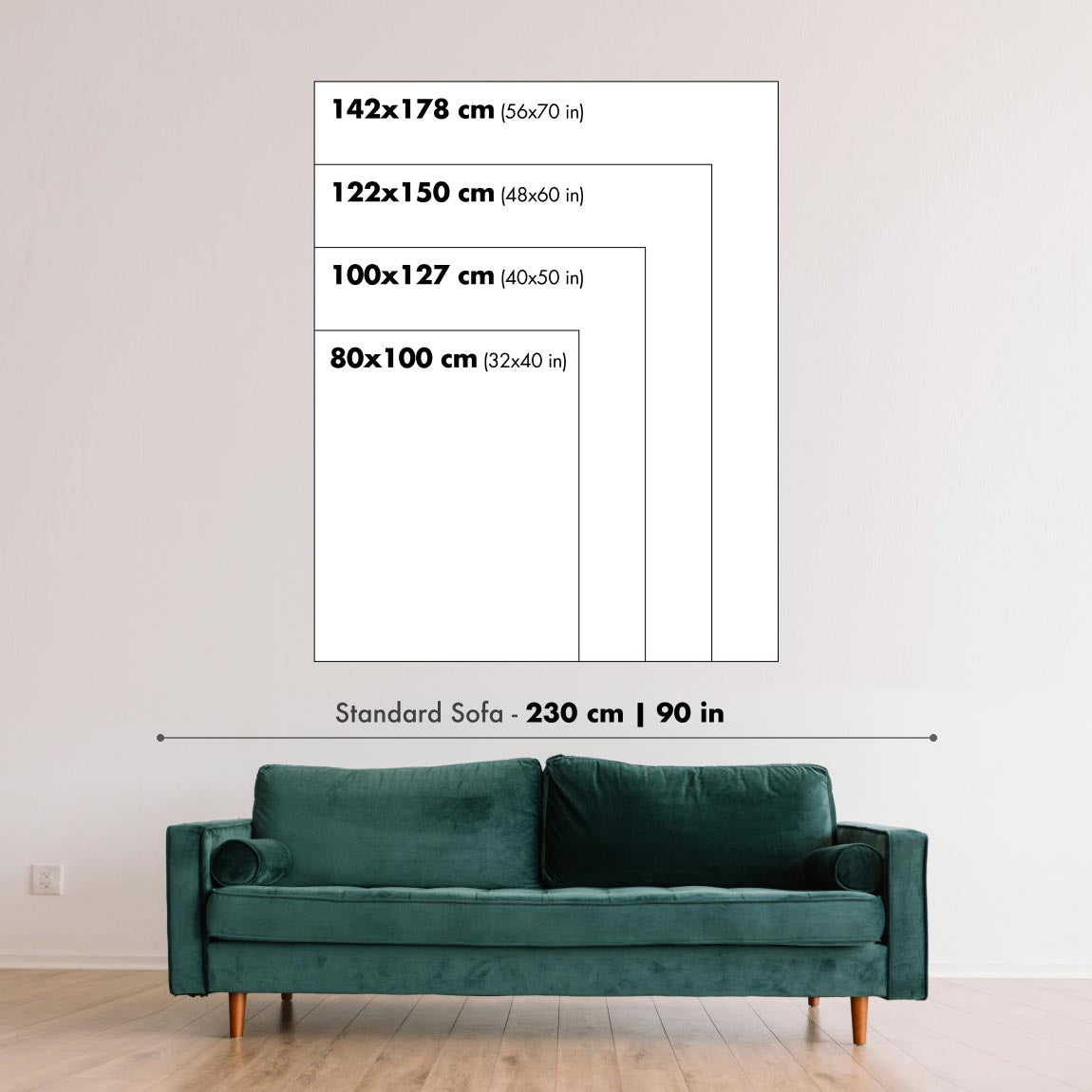
Diese Karte wirkt in jeder Größe großartig, aber ich empfehle immer, wenn der Platz es zulässt, eine größere Größe zu wählen. So können Sie alle Details leicht erkennen.
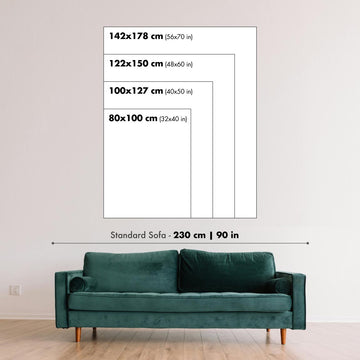
Diese Karte sieht in Größen bis zu 70 Zoll (180 cm) beeindruckend aus. Wenn Sie eine größere Karte suchen, nehmen Sie bitte Kontakt mit uns auf.
Das Modell auf den Angebotsbildern hält die 18x24 Zoll (45x60 cm) Version dieser Karte in den Händen.
Das fünfte Angebotsbild zeigt ein Beispiel meines Personalisierungsservice für Karten.
Wenn Sie nach etwas leicht anderem suchen, sehen Sie sich meine Sammlung der besten alten Karten an, um zu prüfen, ob Ihnen etwas anderes ins Auge fällt.
Bitte kontaktieren Sie mich um zu prüfen, ob ein bestimmter Ort, ein Wahrzeichen oder ein Merkmal auf dieser Karte dargestellt ist.
Dies wäre ein wunderbares Geschenk zum Geburtstag, zu Weihnachten, zum Vatertag, zum Abschied von der Arbeit, zum Jahrestag oder zum Einzug für jemanden aus den auf dieser Karte abgedeckten Gebieten.
Diese Karte ist als Giclée-Druck auf säurefreiem Archiv-Mattpapier erhältlich, oder Sie können sie gerahmt kaufen. Der Rahmen ist ein schöner, schlichter schwarzer Rahmen, der zu den meisten Stilrichtungen passt. Bitte nehmen Sie Kontakt auf, wenn Sie eine andere Rahmenfarbe oder ein anderes Material wünschen. Meine Rahmen sind mit superklarem Acryl in Museumsqualität (Plexiglas/Acrylit) verglast, das deutlich weniger reflektiert als Glas, sicherer ist und immer in einwandfreiem Zustand ankommt.
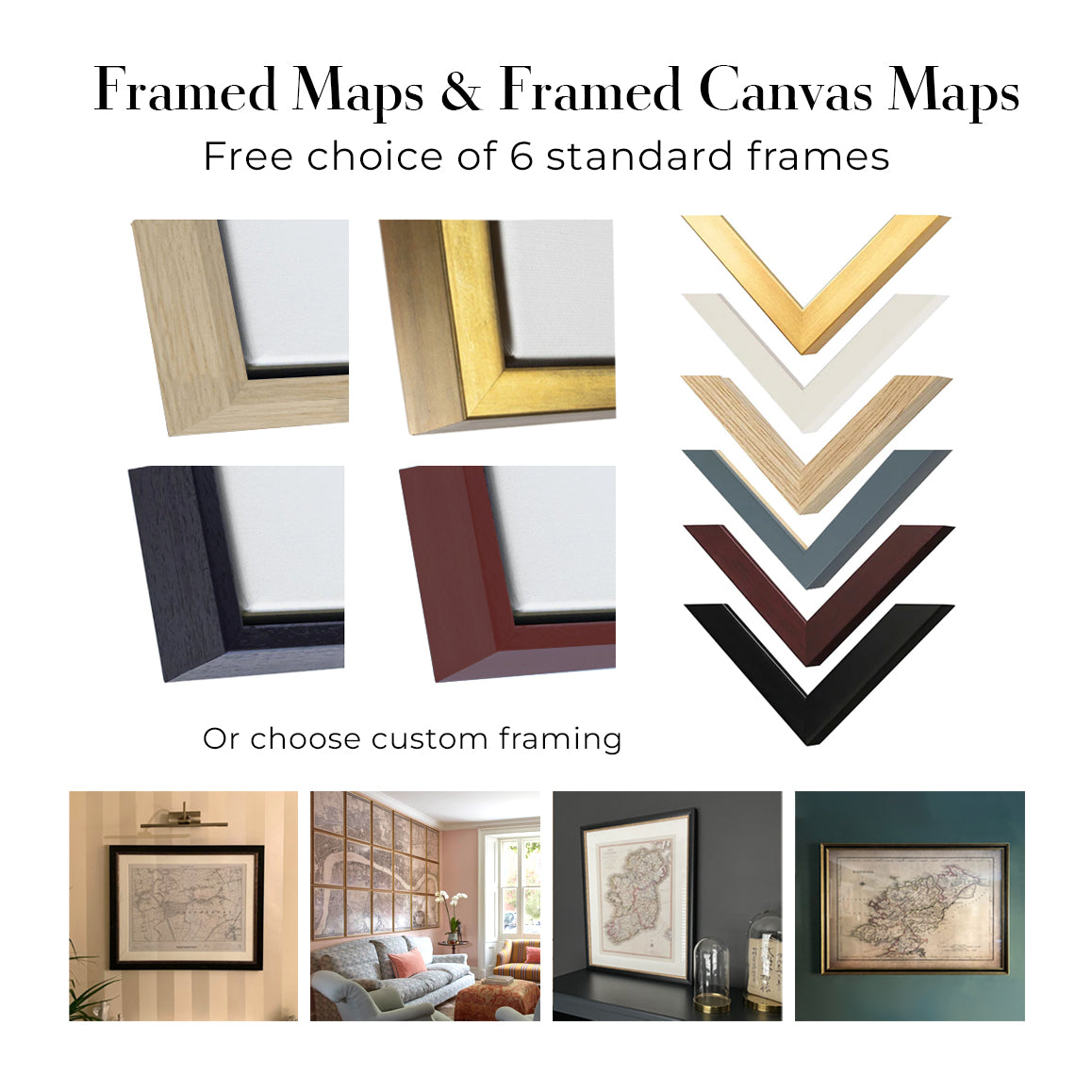
This map is also available as a float framed canvas, sometimes known as a shadow gap framed canvas or canvas floater. The map is printed on artist's cotton canvas and then stretched over a handmade box frame. We then "float" the canvas inside a wooden frame, which is available in a range of colours (black, dark brown, oak, antique gold and white). This is a wonderful way to present a map without glazing in front. See some examples of float framed canvas maps and explore the differences between my different finishes.
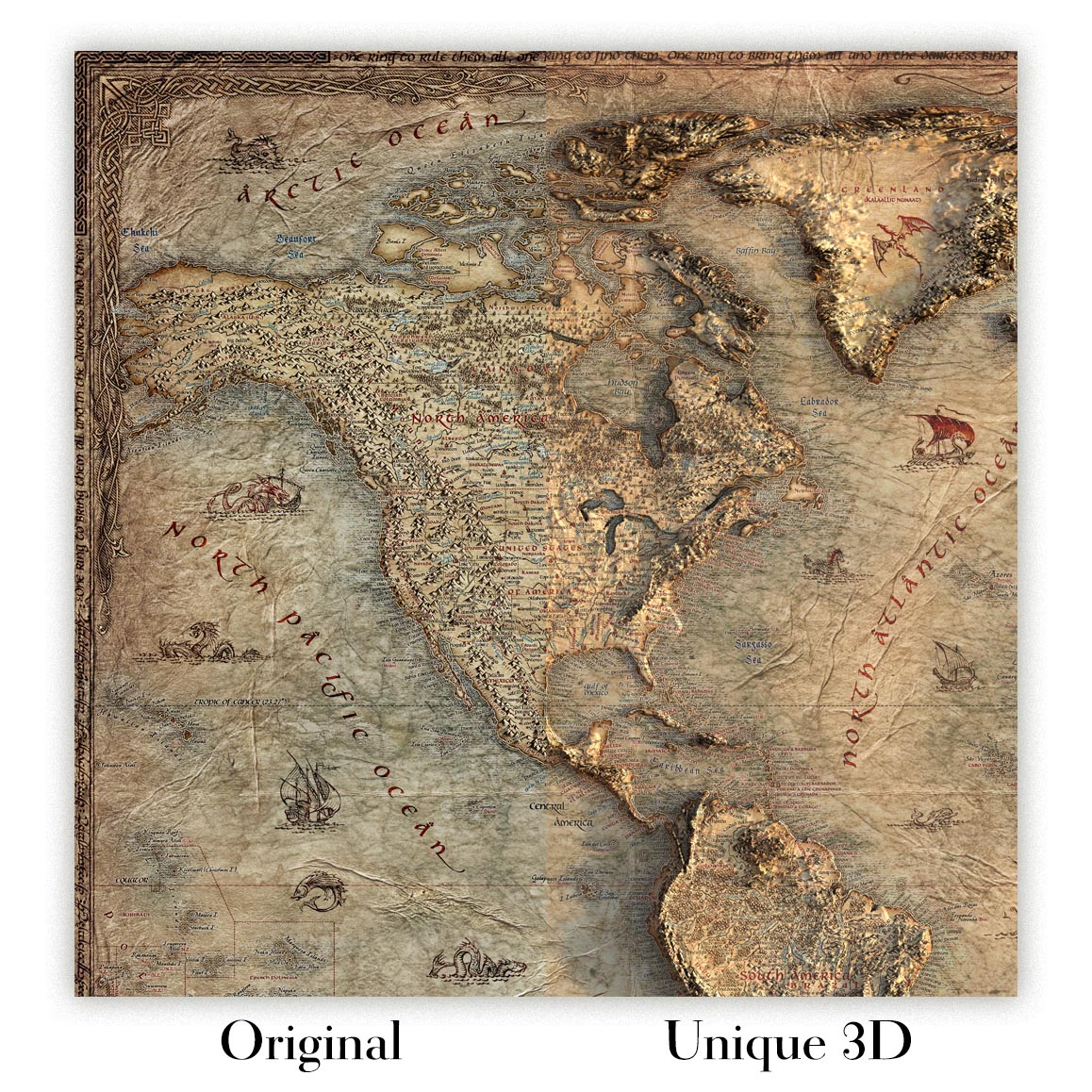
For something truly unique, this map is also available in "Unique 3D", our trademarked process that dramatically transforms the map so that it has a wonderful sense of depth. We combine the original map with detailed topography and elevation data, so that mountains and the terrain really "pop". For more info and examples of 3D maps, check my Unique 3D page.
Charles Fosters Meisterwerk von 1912 mit dem Titel „Palestine in the time of Jesus, 4 B.C. - 30 A.D. (including the period of Herod, 40 - 4 B.C.)“ verdichtet die biblische Geographie zu einer klaren, gelehrten Karte des Landes, das den Rahmen des Neuen Testaments bildet. Foster fügt die Regionen Galiläa, Samarien, Judäa, Idumäa und die hellenisierten Dekapolis zu einer stimmigen Bühne zusammen, wobei sich der Jordan vom See Genezareth bis zum mineralischen Spiegel des Toten Meeres durch das Land zieht. Seine Kartographie stellt den historischen Kontext in den Vordergrund: Wichtige Städte — Jerusalem, Bethlehem, Nazareth, Jericho — sind durch Anmerkungen verankert, die Gelände und Text miteinander verbinden, während zwei maßgebliche Beilagen — Jerusalem in römischer Zeit und Herodes’ Tempel — den Betrachter in das urbane und sakrale Herz des Spätzeitlichen Zweiten Tempels führen.
Mit disziplinierten Hachuren dargestellt, ist das Relief mehr als bloßer Hintergrund; es ist Protagonist. Die judäischen Hochländer steigen in dichten, zweckmäßigen Strichen an, deren steile Zugänge den mühevollen Aufstieg von Jericho nach Jerusalem und die verteidigungsfähige Lage der Hügelstädte erklären. Breitere, lockerere Schattierungen modellieren die sanften Rücken Samarien und die galiläischen Hochflächen, wo wandernde Predigt eng verbundene Dörfer fand. Im Osten gähnt der Jordan-Graben, ein abgesenkter Korridor, der seit der Antike Bewegung lenkt und in dem nüchternen Becken des Toten Meeres endet. Indem Foster Gefälle und Exposition mit solcher taktilen Nuance visualisiert, zeigt er, wie Geographie die Erzählung lenkt — Pilgerwege, politische Grenzlinien und Begegnungsmomente, geprägt von der Physiographie des Landes.
Ebenso überzeugend ist die politische und soziale Überlagerung der Karte. Foster gliedert die regionalen Identitäten mit sicheren Beschriftungen, die die herodianische Ordnung widerspiegeln: Idumäa im Süden, stammesgeschichtlich mit der Dynastie verbunden; Samarien als vermittelnde Mitte; Galiläa zwischen jüdischer Tradition und hellenistischen Strömungen; und die Dekapolis, eine Konstellation griechischer Städte unter römischer Patronage. Hauptstraßen und Fernwege durchziehen diese Zonen und zeichnen plausible Reiserouten zwischen Nazareth und Kapernaum, durch die Täler zum Ufer des Sees und entlang des alten Korridors von der Küste zu den zentralen Hügeln nach. Auf biblische Episoden bezogene Hinweise durchziehen die Landschaft und verwandeln Wege und Orte in einen kuratierten Atlas von Texten, Macht und Bewegung unter Roms wachsamer Verwaltung.
Die Beilage von Jerusalem in der römischen Zeit belohnt eingehende Betrachtung. Sie fasst Straßen, Viertel und öffentliche Einrichtungen in einem prägnanten Plan zusammen, der die geschichtete Autorität der Stadt verdeutlicht: römische Aufsicht, herodianischer Ehrgeiz und priesterliche Verwaltung, eingebettet in Mauern und Terrassen. Die Nähe der Verwaltungsbauten zu den Pilgerachsen erklärt die aufgeladene Choreographie der Stadt während der Feste, während die Darstellung der Zugänge von Bethlehem und Jericho die Metropole in ihre Hochlandtopographie einordnet. Anstatt zu dramatisieren, erläutert Foster — er legt den urbanen Organismus als lesbares Diagramm offen, sodass historische Episoden nicht nur zeitlich, sondern genau räumlich verortet werden können, vor dem Hintergrund von Hängen, Mauern und Verkehrswegen, die die antike Bewegung bestimmten.
Die Beigabe mit dem Innenplan des Tempels des Herodes lenkt den Blick auf den heiligen Bezirk im Zentrum der Darstellungen. Vorhöfe, Portiken und monumentale Zugänge werden mit didaktischer Präzision erläutert und ergeben ein Arbeitsdiagramm von Kult, Autorität und Menschenströmen in der späten Zeit des Zweiten Tempels. Indem Foster diesen Plan neben die umfassendere Stadt- und Provinzkarte stellt, ermöglicht er eine seltene, mehrskalige Lektüre – von der Provinz über die Hauptstadt bis zum Heiligtum –, sodass Schauplätze von Lehre, Prozess und Ritual in ihrem architektonischen Rahmen vorstellbar werden. Veröffentlicht in einem Moment, als die historische Geographie bemüht war, Text und Terrain in Einklang zu bringen, bleibt diese Karte für den Sammler ein kenntnisreicher Führer: gelehrt, elegant und in der Forschung verankert, die das moderne Verständnis des Landes geprägt hat.
Länder und Regionen auf dieser Karte
- Regionen: Palästina (einschließlich Galiläa, Samarien, Judäa und Idumäa).
- Gewässer: Der Jordan und das Tote Meer.
- Gebirgszüge: Umgebende Hügel und markante Höhenzüge, durch Schraffur dargestellt.
- Straßen- und Fernrouten: Markiert, um die Reisewege innerhalb der Region zu zeigen.
- Besondere Orte: Der Tempel des Herodes und bedeutende römische Bauwerke in Jerusalem.
Bemerkenswerte Merkmale & Sehenswürdigkeiten
- Beschriftete Regionen: Galiläa, Samarien, Judäa, Idumäa, die Dekapolis und andere.
- Wichtige Städte: Jerusalem, Bethlehem, Nazareth, Jericho und andere.
- Beigaben bieten: Detaillierte Pläne von „Jerusalem zur römischen Zeit“ und „Herodes’ Tempel“.
- Schraffurtechniken: Umfangreich eingesetzt, um Berge und Hügel darzustellen.
- Anmerkungen zur historischen Bedeutung: Verschiedene Orte sind mit entsprechenden Hinweisen versehen, die sich auf biblische Texte beziehen.
Historischer und gestalterischer Kontext
- Titel: Palästina zur Zeit Jesu, 4 v. Chr. - 30 n. Chr. (einschließlich der Zeit des Herodes, 40 - 4 v. Chr.)
- Urheber: Charles Foster
- Erscheinungsjahr: 1912
- Kontext: Diese historische Karte veranschaulicht die geografische Landschaft Palästinas im Zusammenhang mit dem Leben Jesu und der herodianischen Zeit.
- Themen: Zentrale Orte und topografische Elemente, die für die späte Zeit des Zweiten Tempels relevant sind, werden hervorgehoben und spiegeln die soziale und politische Landschaft der Epoche wider.
- Historische Bedeutung: Sie spiegelt Sichtweisen der historischen Geographie aus dem frühen 20. Jahrhundert wider und dient als Quelle zum Verständnis des Kontextes der neutestamentlichen Erzählungen.
- Kontext des Kartografen: Charles Foster war bekannt für seinen Schwerpunkt auf biblischer Geographie und trug den historischen Kontext zum geografischen Verständnis biblischer Texte bei.
Bitte prüfen Sie die Bilder noch einmal, um sicherzustellen, dass eine bestimmte Stadt oder ein bestimmter Ort auf dieser Karte dargestellt ist. Sie können uns auch kontaktieren und uns bitten, die Karte für Sie zu prüfen.
Diese Karte wirkt in jeder Größe großartig, aber ich empfehle immer, wenn der Platz es zulässt, eine größere Größe zu wählen. So können Sie alle Details leicht erkennen.
Diese Karte sieht in Größen bis zu 70 Zoll (180 cm) beeindruckend aus. Wenn Sie eine größere Karte suchen, nehmen Sie bitte Kontakt mit uns auf.
Das Modell auf den Angebotsbildern hält die 18x24 Zoll (45x60 cm) Version dieser Karte in den Händen.
Das fünfte Angebotsbild zeigt ein Beispiel meines Personalisierungsservice für Karten.
Wenn Sie nach etwas leicht anderem suchen, sehen Sie sich meine Sammlung der besten alten Karten an, um zu prüfen, ob Ihnen etwas anderes ins Auge fällt.
Bitte kontaktieren Sie mich um zu prüfen, ob ein bestimmter Ort, ein Wahrzeichen oder ein Merkmal auf dieser Karte dargestellt ist.
Dies wäre ein wunderbares Geschenk zum Geburtstag, zu Weihnachten, zum Vatertag, zum Abschied von der Arbeit, zum Jahrestag oder zum Einzug für jemanden aus den auf dieser Karte abgedeckten Gebieten.
Diese Karte ist als Giclée-Druck auf säurefreiem Archiv-Mattpapier erhältlich, oder Sie können sie gerahmt kaufen. Der Rahmen ist ein schöner, schlichter schwarzer Rahmen, der zu den meisten Stilrichtungen passt. Bitte nehmen Sie Kontakt auf, wenn Sie eine andere Rahmenfarbe oder ein anderes Material wünschen. Meine Rahmen sind mit superklarem Acryl in Museumsqualität (Plexiglas/Acrylit) verglast, das deutlich weniger reflektiert als Glas, sicherer ist und immer in einwandfreiem Zustand ankommt.
This map is also available as a float framed canvas, sometimes known as a shadow gap framed canvas or canvas floater. The map is printed on artist's cotton canvas and then stretched over a handmade box frame. We then "float" the canvas inside a wooden frame, which is available in a range of colours (black, dark brown, oak, antique gold and white). This is a wonderful way to present a map without glazing in front. See some examples of float framed canvas maps and explore the differences between my different finishes.
For something truly unique, this map is also available in "Unique 3D", our trademarked process that dramatically transforms the map so that it has a wonderful sense of depth. We combine the original map with detailed topography and elevation data, so that mountains and the terrain really "pop". For more info and examples of 3D maps, check my Unique 3D page.
Viele unserer Karten und Kunstdrucke werden als durchdachte Geschenke für Wohnungen, Büros, Arbeitszimmer und bedeutungsvolle Orte ausgewählt.
Wählen Sie eine gerahmte Option als das einfachste, fertig zum Aufhängen gelieferte Geschenk, oder entscheiden Sie sich für einen ungerahmten Druck, wenn der Empfänger seinen eigenen Rahmen lieber selbst auswählen möchte.
Wir fertigen Bestellungen lokal in 23 Ländern weltweit, sodass Geschenke oft in der Nähe des Empfängers produziert werden können. Das trägt dazu bei, dass sie schneller ankommen, sicherer transportiert werden und Überraschungen durch Zoll oder Einfuhrabgaben vermieden werden.
- Wir können direkt an den Empfänger liefern
- Gerahmte Werke werden fertig zum Aufhängen geliefert
- Ungerahmte Drucke werden sorgfältig in einer stabilen Schutzhülle versandt
- Nahezu jede Bestellung wird lokal gefertigt – für schnelleres und sichereres Schenken
- 90 Tage Rückgaberecht geben dem Empfänger Zeit für seine Entscheidung
Wenn Sie nicht sicher sind, was Sie wählen sollen, kontaktieren Sie uns bitte. Wir helfen Ihnen gern dabei, die passende Karte, Größe, Ausführung oder Lieferoption auszuwählen.
Für die meisten Bestellungen beträgt die Lieferzeit etwa 3 Werktage. Personalisierte und maßgeschneiderte Produkte benötigen länger, da ich die Personalisierung durchführen und sie Ihnen zur Genehmigung zusenden muss, was normalerweise 1 oder 2 Tage dauert.
Bitte beachten Sie, dass sehr große gerahmte Bestellungen in der Regel länger für die Herstellung und Lieferung benötigen.
Wenn Sie möchten, dass Ihre Bestellung bis zu einem bestimmten Datum ankommt, bitte kontaktieren Sie mich, bevor Sie bestellen, damit wir den besten Weg finden können, um sicherzustellen, dass Sie Ihre Bestellung rechtzeitig erhalten.
Ich drucke und rahme Karten und Kunstwerke in 23 Ländern weltweit. Das bedeutet, dass Ihre Bestellung lokal gefertigt wird, was die Lieferzeit verkürzt und sicherstellt, dass sie während der Lieferung nicht beschädigt wird. Sie zahlen nie Zoll oder Einfuhrgebühren, und wir stoßen weniger CO2 in die Luft aus.
Alle meine Karten und Kunstdrucke sind gut verpackt und werden in einem robusten Rohr versendet, wenn sie ungerahmt sind, oder von Schaum umgeben, wenn sie gerahmt sind.
Ich versuche, alle Bestellungen innerhalb von 1 oder 2 Tagen nach Erhalt Ihrer Bestellung zu versenden, obwohl einige Produkte (wie Gesichtsmasken, Tassen und Tragetaschen) länger zur Herstellung benötigen können.
Wenn Sie Express-Lieferung an der Kasse auswählen, priorisieren wir Ihre Bestellung und versenden sie per 1-Tages-Kurier (Fedex, DHL, UPS, Parcelforce).
Nächster Tag Lieferung ist auch in einigen Ländern verfügbar (USA, UK, Singapur, VAE), aber bitte versuchen Sie, früh am Tag zu bestellen, damit wir es rechtzeitig versenden können.
Lesen Sie meinen vollständigen Leitfaden zur Lieferung und lokalen Produktion
Mein Standardrahmen ist ein Galerie-Stil-Rahmen aus schwarzem Eschenholz. Er ist einfach und sieht ziemlich modern aus. Mein Standardrahmen ist etwa 20 mm (0,8 Zoll) breit.
Ich verwende super-klares Acryl (Plexiglas/Acrylt) für das Glas des Rahmens. Es ist leichter und sicherer als Glas – und es sieht besser aus, da die Reflexion geringer ist.
Sechs Standardrahmenfarben sind kostenlos erhältlich (schwarz, dunkelbraun, dunkelgrau, Eiche, weiß und antikgold).
Die meisten Karten, Kunstwerke und Illustrationen sind auch als gerahmte Leinwand erhältlich. Wir verwenden matte (nicht glänzende) Baumwollleinwand, spannen sie über einen nachhaltig beschafften Buchenrahmen und 'schweben' dann das Stück innerhalb eines Holzrahmens. Das Endergebnis ist ziemlich schön, und es gibt keine Verglasung, die im Weg ist.
Alle Rahmen werden "bereit zum Aufhängen" geliefert, entweder mit einer Schnur oder Halterungen auf der Rückseite. Sehr große Rahmen haben schwere Aufhängeplatten und/oder eine Montageschiene. Wenn Sie Fragen haben, können Sie bitte Kontakt aufnehmen.
Sehen Sie sich einige Beispiele meiner gerahmten Karten und gerahmten Leinwandkarten an.
Alternativ kann ich auch alte Karten und Kunstwerke auf Leinwand, Schaumstoffplatten, Baumwollrag und andere Materialien liefern.
Wenn Sie Ihre Karte oder Ihr Kunstwerk selbst rahmen möchten, lesen Sie bitte zuerst meinen Größenleitfaden.
Wir arbeiten mit Innenarchitekten, Unternehmen aus dem Gastgewerbe, Immobilienfachleuten, Büros und Firmenkunden an Einzelstücken sowie an größeren, abgestimmten Projekten.
Diese Karte kann an eine bestimmte Wand, einen Raum oder ein Projekt angepasst werden, und unsere Werkstatt unterstützt Sie vor der Produktion bei der Abstimmung von Abmessungen, Material und Rahmung.
- Exakte, übergroße und maßgefertigte Abmessungen
- Individuelle Rahmung, Montage und alternative Materialien
- Abgestimmte Stücke für mehrere Räume oder Standorte
- Personalisierung der Karte, um wichtige Orte zu markieren oder zusätzliche Details hinzuzufügen
- Beratung zu Karte und Rahmung durch unsere Werkstatt
- Lokale Produktion für Projekte in aller Welt
Besprechen Sie dieses Werk mit unserem Team für Trade & Projects
Meine Karten sind äußerst hochwertige Reproduktionen von Originalkarten.
Ich beziehe originale, seltene Karten aus Bibliotheken, Auktionshäusern und Privatsammlungen auf der ganzen Welt, restauriere sie in meiner Londoner Werkstatt und erstelle dann mit speziellen Giclée-Tinten und -Druckern wunderschöne Karten, die sogar noch besser aussehen als das Original.
Meine Karten werden auf säurefreiem, mattem Archivpapier (nicht glänzend) gedruckt, das sich sehr hochwertig anfühlt und fast wie Karton aussieht. Technisch gesehen beträgt das Papiergewicht/die Papierdicke 10mil/200g/m². Es eignet sich perfekt zum Einrahmen.
Ich drucke mit UV-lichtbeständigen Ultrachrome-Giclée-Pigmenttinten von Epson – einige der besten Tinten, die Sie finden können.
Ich kann auch machen Karten auf Leinwand, Baumwolllappen und andere exotische Materialien.
Erfahren Sie mehr über The Unique Maps Co.
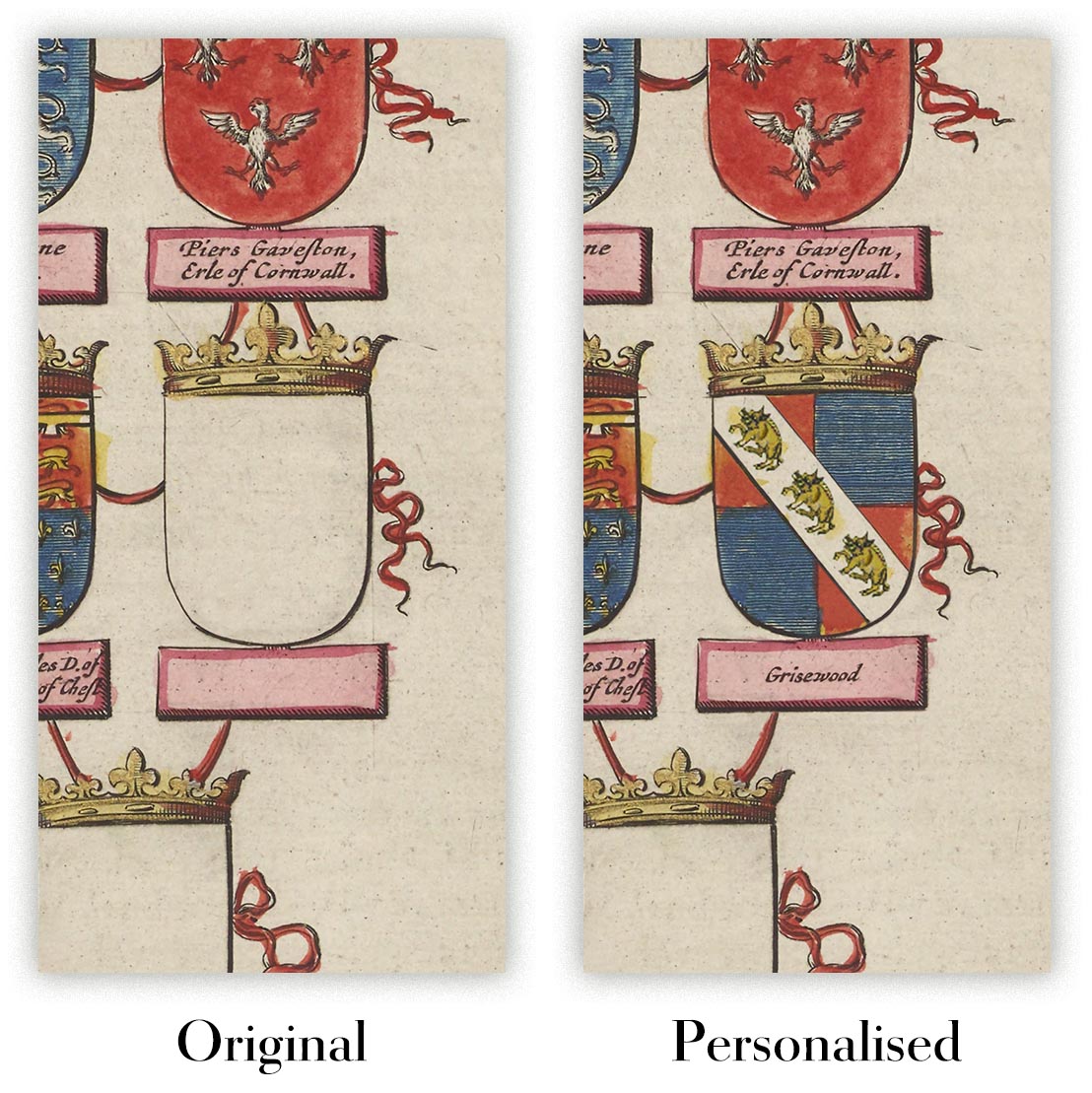
Kartenpersonalisierung
Wenn Sie nach dem perfekten Geschenk zum Jahrestag oder zur Einweihung suchen, kann ich Ihre Karte personalisieren, um sie wirklich einzigartig zu machen. Ich kann beispielsweise eine kurze Nachricht hinzufügen, einen wichtigen Ort hervorheben oder das Wappen Ihrer Familie hinzufügen.
Die Möglichkeiten sind nahezu unbegrenzt. Bitte sehen Sie sich meine Kartenpersonalisierungsseite für einige wunderbare Beispiele dessen, was möglich ist.
Um eine personalisierte Karte zu bestellen, wählen Sie „Personalisieren Sie Ihre Karte“, bevor Sie sie in den Warenkorb legen.
In Kontakt kommen wenn Sie nach komplexeren Anpassungen und Personalisierungen suchen.
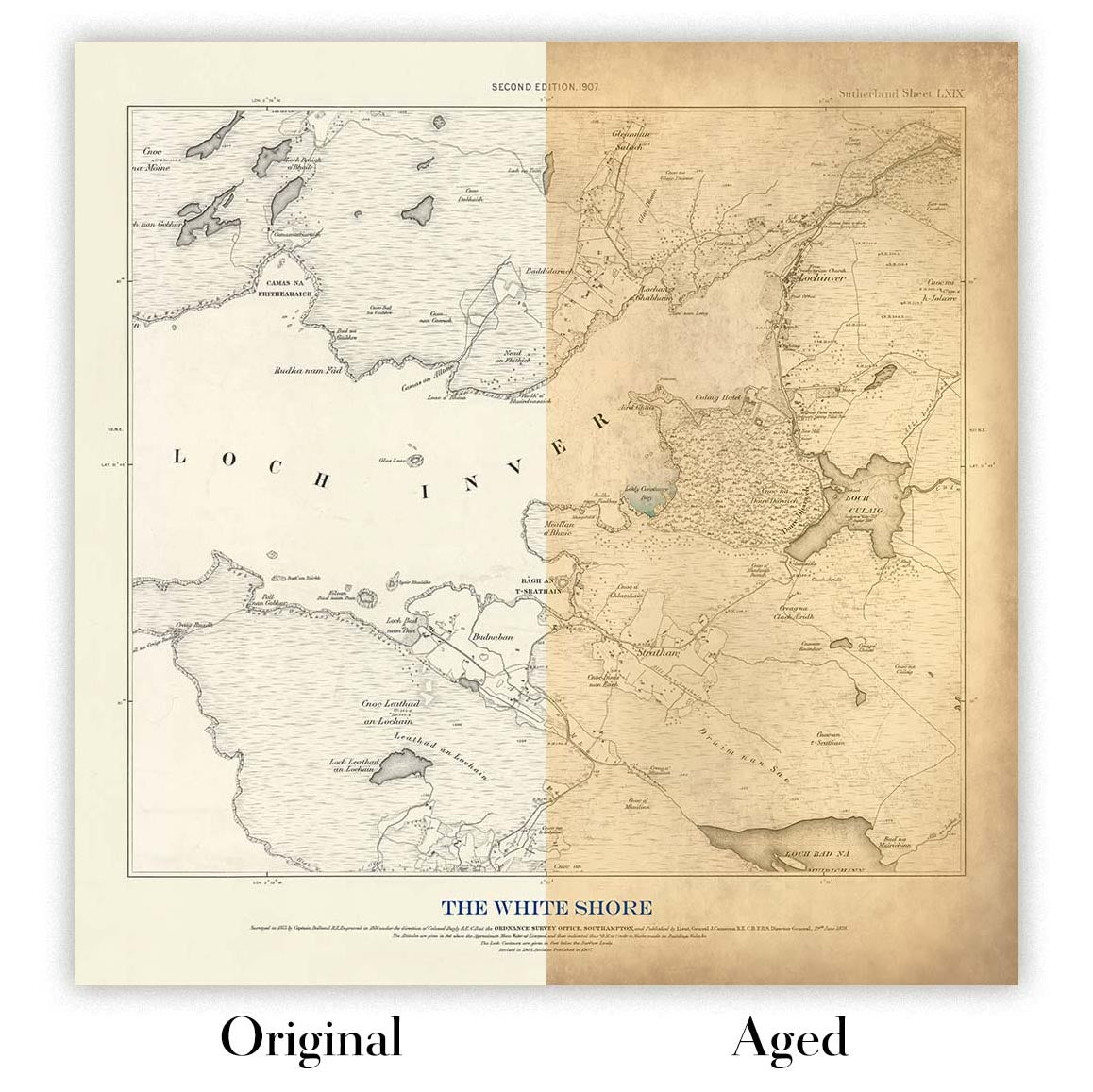
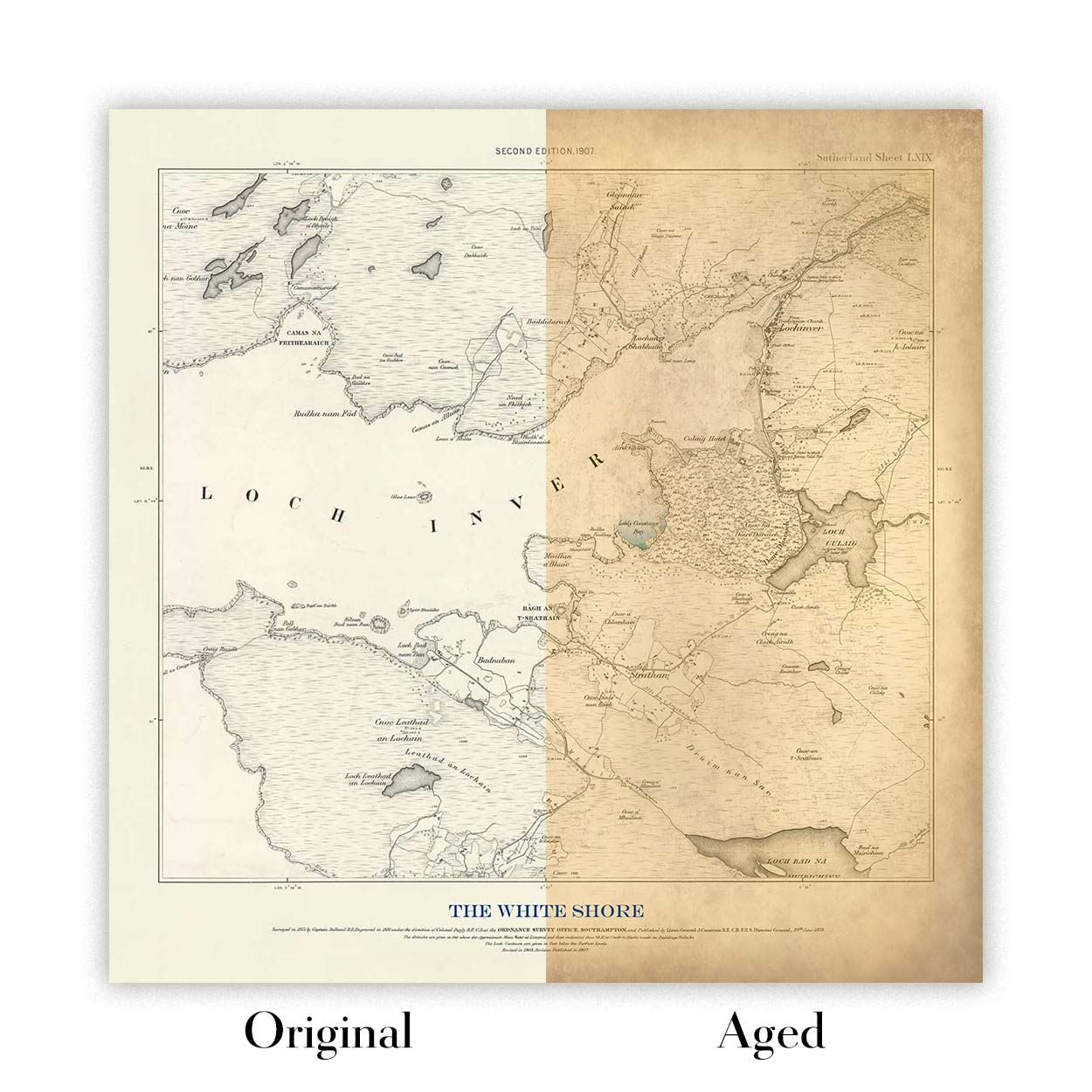
Kartenalterung
Im Laufe der Jahre wurde ich von Kunden hunderte Male gefragt, ob sie eine Karte kaufen könnten, die noch älter.
Nun, jetzt können Sie das, indem Sie „Alter“ auswählen, bevor Sie eine Karte in Ihren Warenkorb legen.
Alle Produktfotos, die Sie auf dieser Seite sehen, zeigen die Karte in ihrer Originalform. So sieht die Karte heute aus.
Wenn Sie „Gealtert“ auswählen, werde ich Ihre Karte von Hand altern lassen. Dazu verwende ich ein spezielles und einzigartiges Verfahren, das ich durch jahrelanges Studium alter Karten und Gespräche mit Forschern zum Verständnis der Chemie alternder Papiere entwickelt habe, und natürlich ... viel Übung!
Wenn Sie sich nicht sicher sind, bleiben Sie bei der Originalfarbe der Karte. Wenn Sie etwas Dunkleres und älter Wenn Sie auf der Suche sind, entscheiden Sie sich für „Aged“.
Sehen Sie einige erstaunliche Beispiele für gealterte Karten.
Seit 1984 restaurieren und fertigen wir Karten und Kunstdrucke an, und wir stehen hinter jedem einzelnen Stück.
Jede Bestellung ist durch unsere 10-Jahres-Garantie und unsere Garantie für beschädigungsfreie Lieferung abgesichert. Sollte Ihr Stück beschädigt bei Ihnen ankommen, ersetzen oder reproduzieren wir es kostenlos. Sollte sonst etwas nicht in Ordnung sein, kontaktieren Sie unser Werkstatt-Team, und wir kümmern uns umgehend darum.
Ausführliche Informationen finden Sie in unseren Rückgabe- und Erstattungsrichtlinien.


