
















Rosa arvensis ovata by Pierre Joseph Redouté, 1817


-
FREE delivery in 2 to 3 days
Free delivery in 2 to 3 days
Your map should be delivered in 2 to 3 working days with free delivery, worldwide.
Father's Day orders: Please use Next Day delivery at checkout. Free delivery is unlikely to arrive on time.
We make maps by hand locally in 23 countries, including the EU
![]() . If you're buying a gift for someone in another country, we will make the map locally to them.
. If you're buying a gift for someone in another country, we will make the map locally to them.You will never pay import tax or customs duty.
Express delivery is available at checkout which can reduce the delivery time to 1-2 days.
Please note that personalised maps, and larger framed maps, can take longer to produce and deliver.
If you need your order to arrive by a certain date, contact me and we can discuss your options.
-
Certified sustainable +
we plant trees🌳
Sustainability & Tree Planting
Here at The Unique Maps Co., we have an unusually high affinity for paper. After all, without paper, there can be no maps!
That's why all of our paper, frames and packaging are from FSC certified sources.
But we don't stop there. We've partnered with Treeapp to plant trees around the world.
If you spend €50 or more, we'll plant a tree in your name.
We also cover the costs of offsetting the carbon emissions on all deliveries.
- Framing & free personalisation available
-
90 day money back guarantee
90 days to return and refund
Products can be returned within 90 days for a full refund, or exchange for another product.
For personalised or custom made items, we may offer you a non-expiring gift card, as we cannot resell personalised orders.
If you have any questions, get in touch. For more information, see our full returns & exchanges policy.
My maps are rare, museum-grade, restored old maps sourced from libraries, auction houses and private collections across the globe.


(Maggiori informazioni)
Gift message & custom finish

If you want to add a gift message, or a finish (jigsaw, aluminium board, etc.) that is not available here, please request it in the "order note" when you check out.
Every order is custom made, so if you need the size adjusted slightly, or printed on an unusual material, just let us know. We've done thousands of custom orders over the years, so there's (almost) nothing we can't manage.
You can also contact us before you order, if you prefer!
- FREE 2-3 day worldwide delivery
- 90 day money back guarantee
- Handmade, museum-grade quality
- Bank grade payment security

Dating from 1817, Pierre-Joseph Redouté’s Rosa Arvensis Ovata (1817–1824) presents a form of the field rose, Rosa arvensis, as a slender, branching specimen rather than a conventional bouquet. White flowers gather near the upper centre, their pale petals opening around finely articulated yellow stamens, while serrated leaves spread across the stem in alternating greens. Lower down, a single vivid red fruit provides a compact counterpoint to the airy blossoms above.
Redouté was among the most accomplished botanical artists of the early nineteenth century, admired for reconciling scientific clarity with exceptional compositional grace. This study belongs to the period of his celebrated work on roses, undertaken between 1817 and 1824, when botanical publications served both as records of plant structure and as objects of cultivated visual pleasure. His specimens rarely appear rigidly diagrammatic: each is arranged with an alert sense of rhythm, while remaining attentive to the characteristics by which the plant might be recognised.
A closer look
The composition is built around a gently leaning stem that carries the eye upwards through several distinct stages of growth. The lower branches are comparatively sparse, exposing small thorns and the junctions from which the leaves emerge. Towards the centre right, the foliage becomes fuller and darker. Fine lines follow the veins from each central rib towards the sharply toothed margins, while subtle shifts from deep green to yellow-green suggest leaves turning at different angles to the light.
Above this denser foliage, the flowers occupy a lighter, more open area. Several blooms are fully expanded, their rounded white petals overlapping without losing their individual contours. Faint tonal modelling gives them an almost translucent delicacy against the warm, pale ground. Nearby buds, touched with soft pink, introduce another moment in the plant’s cycle: closed form, open blossom and ripe fruit are all brought together within a single coherent study.
The red fruit at the lower left is particularly effective. Small in scale but strong in colour, it arrests the downward movement of the stem and balances the cluster of white flowers above. Its smooth, rounded surface contrasts with the matte, intricately veined leaves and the pointed thorns. Beneath the specimen, elegant lettering identifies it in French as “Roser des champs à fruits ovoïdes”, accompanied by the names “Imprimerie de Rémond” and “Chafray sculp.” The inscription forms a restrained typographic base without disturbing the generous negative space around the plant.
Context and significance
Redouté worked at a moment when botanical illustration demanded more than an attractive likeness. A successful plate had to make structure legible: the disposition of leaves, the character of the flower, the form of the fruit and even the defensive thorns all carried identifying value. Here, those details are integrated so naturally that the scientific and decorative aspects cannot easily be separated. The specimen is clear enough to be studied, yet its curving stem and asymmetrical balance give it the poise of an independent floral composition.
The result is characteristic of Redouté at his most refined. Nothing extraneous competes with the rose, but the page is far from austere: minute contrasts of texture, colour and growth reward close attention. Particularly appealing to admirers of roses and the history of botanical art, Rosa Arvensis Ovata demonstrates how disciplined observation could become a form of quiet elegance.
Choosing the right size and finish
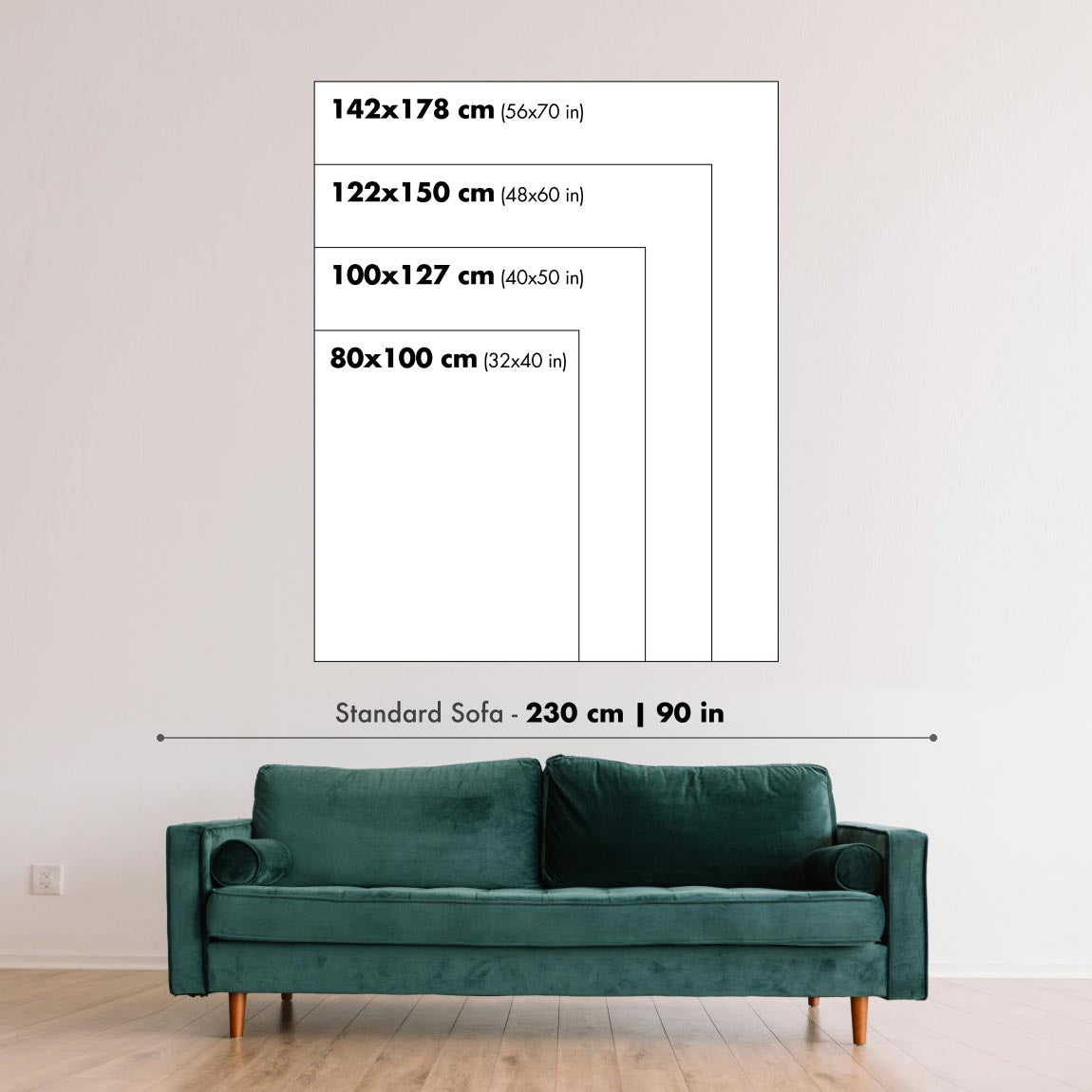
Artwork can feel intimate at smaller sizes and dramatically more architectural at larger ones. Use the room preview, model image and size guide to see how the proportions and scale will work in your space.
If you need an exact size, specialist framing or help planning a larger display, ask our workshop for advice.
The model in the listing images is holding the 18x24in (45x60cm) version of this art print.
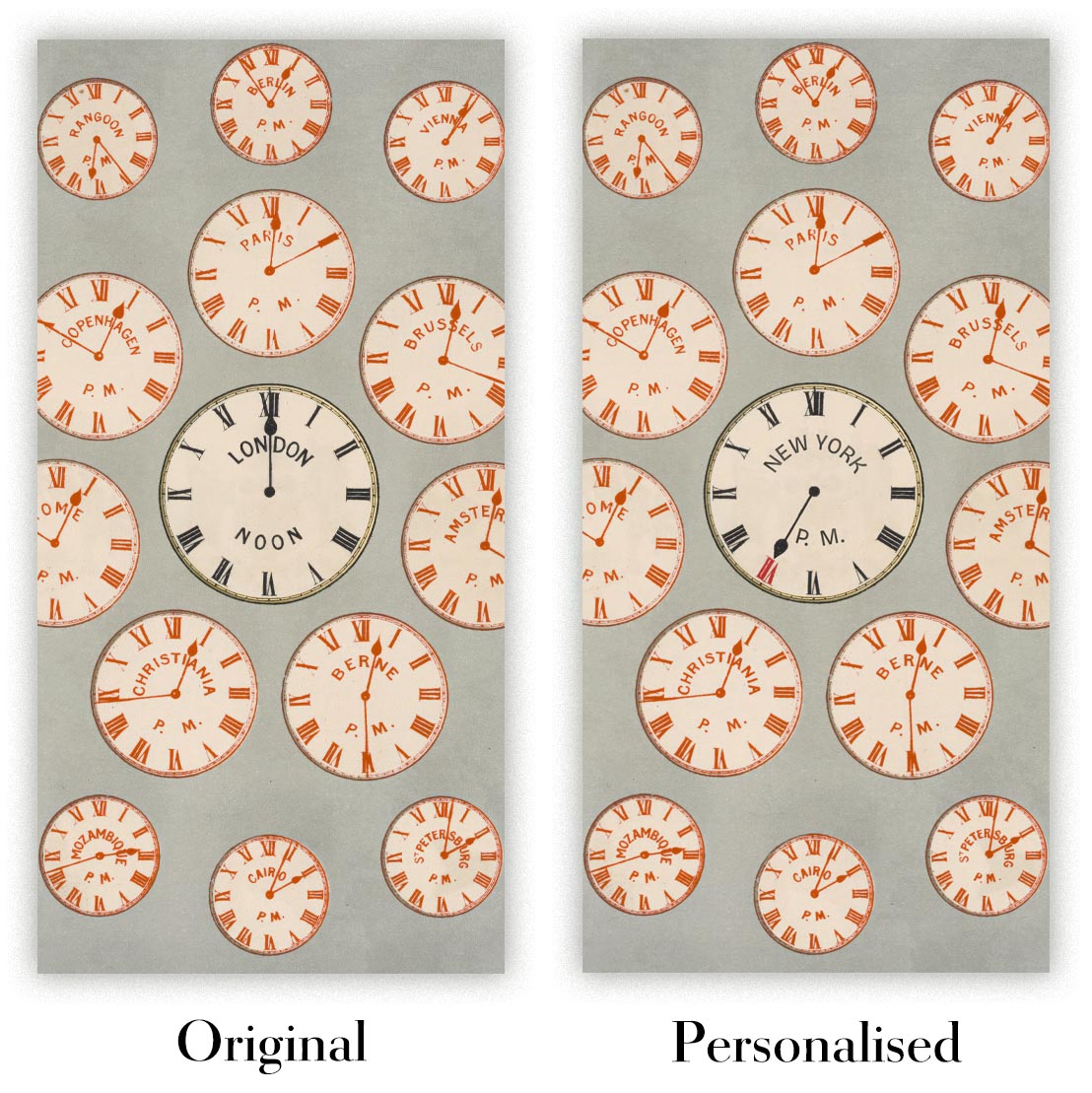
Where personalisation is available, you can add a short title or dedication, or one considered visual detail. See examples of personalised artwork.
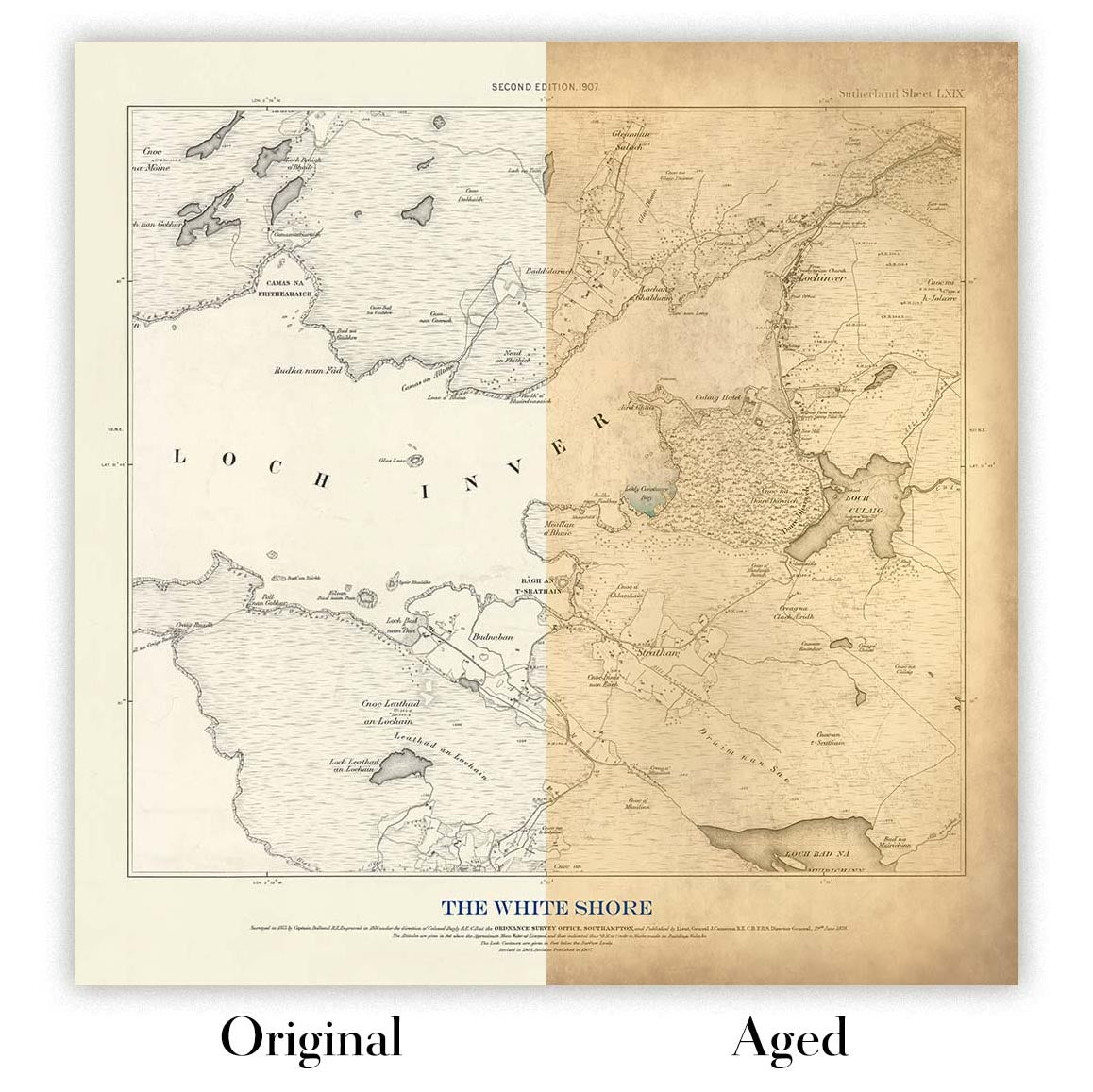
Choose Original to retain the colour and character of the source artwork, or Aged for a warmer, more antique appearance. See examples of our Aged artwork.
Every piece is produced to archival standards using fade-resistant pigment inks on acid-free matte art paper. Choose an art print, framed art print or framed canvas using the finish options above.
Framed art prints use crystal-clear optical acrylic for excellent clarity, lower weight and safer delivery than glass. Each piece arrives professionally framed and ready to hang.
Selected artworks can be produced at statement sizes up to 3 metres (10ft). Custom sizing and specialist framing are also available. If the exact option you need is not listed, contact our workshop.
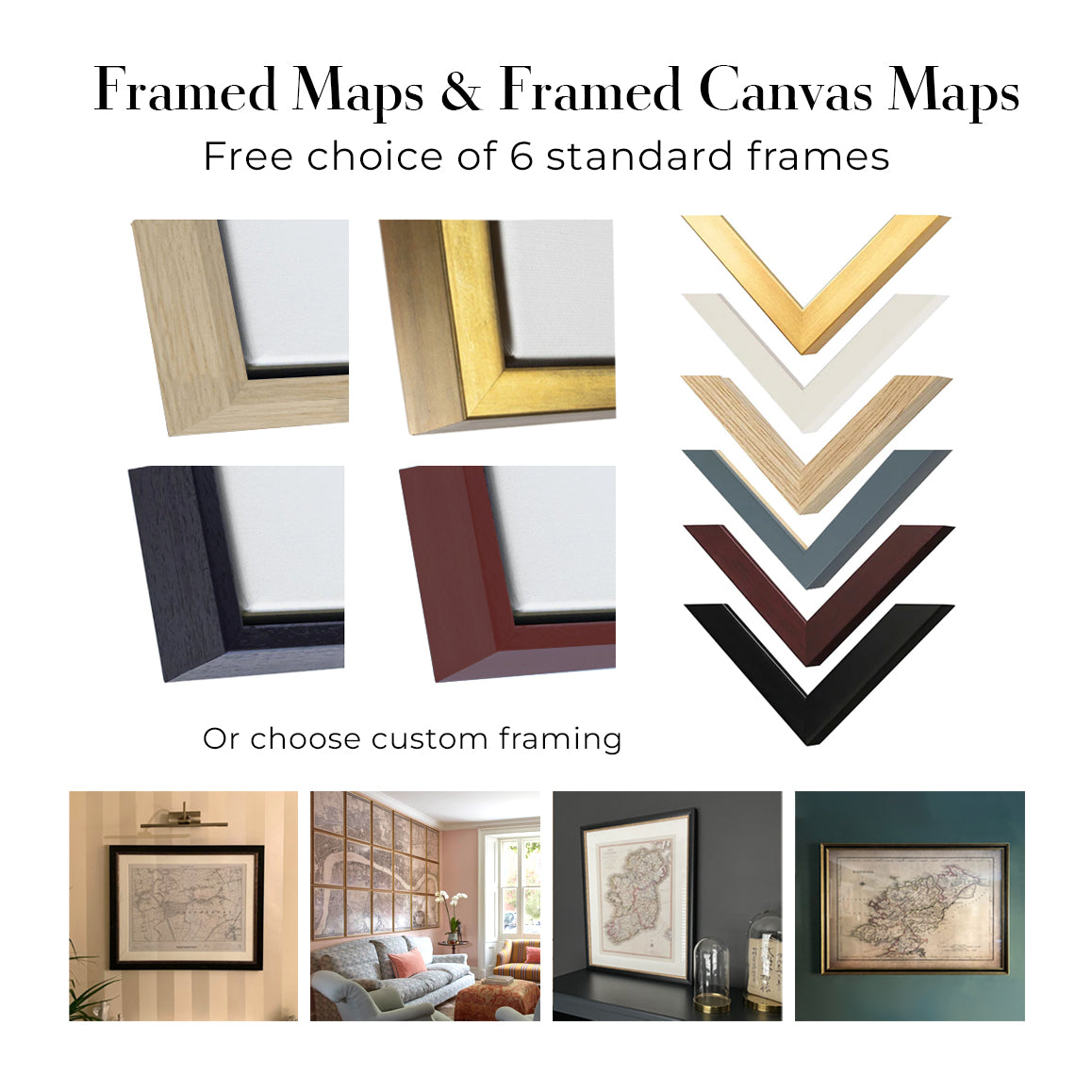
This artwork is also available as a float framed canvas, sometimes known as a shadow gap framed canvas or canvas floater. The work is printed on artist's cotton canvas and then stretched over a handmade box frame. We then "float" the canvas inside a wooden frame, which is available in a range of colours (black, dark brown, oak, antique gold and white). This is a wonderful way to present an art print without glazing in front. See some examples of float framed canvas art and explore the differences between my different finishes.
Most orders are made locally and delivered in around 2–3 working days, depending on the product, size and destination.
We print and frame maps and artwork in 23 countries around the world, so your order is usually made close to you or your recipient. That means faster delivery, less time in transit, and no customs or import duty surprises.
Personalised and customised pieces usually take an extra 1–2 working days, because we prepare your design and send it to you for approval before printing.
Very large framed orders can take a little longer, as they need extra care in production and delivery.
Every order is carefully packaged: unframed prints are sent in a strong protective tube, while framed pieces are securely packed with protective materials around the frame.
If you need your order by a particular date, please contact us before ordering. We’ll check the best production route and delivery option for your location.
Express delivery is available at checkout for most countries. Next-day delivery is available in the UK, US, Singapore and the UAE.
Your order is covered by our 90-day returns policy and 10-year guarantee.
Our standard frame is a gallery-style black ash hardwood frame, with a simple, modern look. It is approximately 20mm (0.8in) wide. You can also view some lovely customer photos of framed maps and art.
We use super-clear acrylic glazing, also known as Perspex or Acrylite, instead of traditional glass. It is lighter, safer, and has lower reflectivity, giving the artwork a clearer, cleaner appearance.
Six standard frame colours are available at no extra cost: black, dark brown, dark grey, oak, white, and antique gold. Custom framing and mounting/matting is also available for customers looking for something more specific.
Most maps, art prints, and illustrations are also available as a framed canvas. We use matte cotton canvas, stretch it over a sustainably sourced wooden box frame, and then float the piece within a wooden outer frame. The finished result is beautifully presented, with no glazing between you and the artwork.
All frames are supplied ready to hang, with either string or brackets fitted to the back. Very large frames will include heavy-duty hanging plates and/or a mounting baton. If you have any questions, please get in touch.
We can also supply old maps and artwork on canvas, foam board, cotton rag, and other materials.
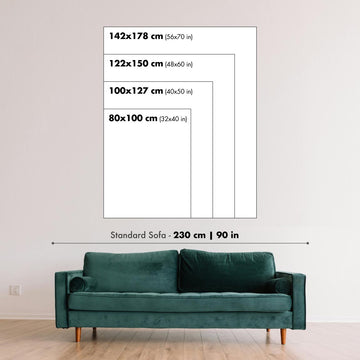
If you would prefer to frame your map or artwork yourself, please read our size guide before ordering.
Every Unique Maps piece begins with an authentic cartographic source or an original design from our London studio.
For our historic maps, we source rare originals from libraries, archives, auction houses and private collections around the world. We carefully restore each map for print—repairing age-related damage, balancing colour and improving clarity while preserving its original detail, texture and character.
Once restored, the map is prepared for your chosen size and finish. Your piece is then printed and, where selected, framed close to its delivery destination.
Our map prints use acid-free 200gsm archival matte paper and fade-resistant pigment inks, creating a rich, non-glossy finish designed to last. Framed maps use crystal-clear optical acrylic and arrive ready to hang.
Canvas, cotton-rag and other specialist presentations are also available. Learn more about our materials and finishes.
Personalising your map
You can add a short title or dedication, mark one meaningful place, or request one considered visual detail. For personalised designs, we send a proof before printing and you can request changes before approval.
For more complex bespoke commissions, contact our design team.
Original or Aged
Choose Original for true-to-source colour, or Aged for a warmer, richer antique character created with our specialist ageing process. See examples of our Aged maps.
Restauriamo e produciamo mappe e stampe d’arte dal 1984, e garantiamo personalmente ogni pezzo.
Ogni ordine è coperto dalla nostra garanzia di 10 anni e dalla garanzia di consegna senza danni. Se il vostro pezzo arriva danneggiato, lo sostituiremo o lo rifaremo gratuitamente. Se qualsiasi altro aspetto non fosse conforme, contattate il nostro team di laboratorio e provvederemo tempestivamente a risolvere il problema.
Per tutti i dettagli, consultate la nostra politica su resi e rimborsi.













Oppure cerca qualcosa nel negozio.


