












Vin Mariani Vintage Tonic Wine Poster by Jules Chéret, 1894

Œuvre d’art authentique
L’œuvre que nous imprimons est fidèlement restituée à partir de la source originale - généralement un musée, une bibliothèque ou une collection privée. Nous ne remplaçons jamais, ne redessinons jamais et n’inventons jamais le travail de l’artiste à l’aide d’une IA générative.
Livraison de Noël & cadeaux

Envoyez-le directement au destinataire
Ajoutez un message cadeau dans votre panier, puis saisissez l’adresse de livraison du destinataire lors du paiement. Nous imprimerons votre message sur une carte. Aucun prix n’est inclus dans le colis.
Délais de livraison
La livraison standard est offerte dans le monde entier et prend généralement environ 3 jours ouvrés. Vous envoyez un cadeau à l’étranger ? Nous fabriquons la plupart des commandes localement, dans le pays du destinataire.
Veuillez prévoir un délai supplémentaire pour la conception et l’approbation du bon à tirer pour les commandes personnalisées. Voir les détails de livraison.
Retours : Les commandes standard peuvent être retournées ou échangées dans les 90 jours suivant la livraison. Les pièces personnalisées et réalisées sur mesure sont généralement exclues des retours pour simple changement d’avis. Voir notre politique de retour.
Soldes du Black Friday
Choisissez un article et bénéficiez de 20 % de réduction.
Choisissez deux œuvres et bénéficiez de 30 % de réduction sur les deux. Vous pouvez panacher cartes et œuvres d’art.
Aucun code n’est requis. L’offre s’applique automatiquement.
Conditions générales complètes
L’offre Collectionneur s’applique aux œuvres éligibles dans leurs configurations standard fabriquées à la commande. Les formats sur mesure, les créations personnalisées et les travaux de commande sont exclus. Les produits comportant « personalised » ou « custom » dans leur nom sont généralement exclus.
L’offre est appliquée sous la forme de deux remises automatiques distinctes : l’une pour les petits formats et l’autre pour les grands formats. Pour en bénéficier, vous devez acheter deux œuvres éligibles appartenant au même groupe de formats. Les cartes et tirages d’art peuvent être panachés au sein de chaque groupe.
Par exemple, deux tirages éligibles au format A4 ou 8 × 10 in donnent droit à 30 % de réduction sur les deux. Un tirage en petit format et une œuvre en grand format ne sont pas éligibles ensemble, car des articles appartenant à des groupes de formats différents ne peuvent pas être combinés pour satisfaire à l’exigence de deux articles.
Aucun code de réduction n’est requis. Toute remise applicable est automatiquement appliquée dans votre panier et lors du paiement.
Christmas schedule filling up. Order early.
Christmas orders & our workshop schedule
Our Christmas schedule is filling up, particularly for personalised maps and bespoke pieces. Ordering early allows time to prepare your artwork, complete any design approvals, and arrange printing and framing.
If your order requires a design preview, we’ll ask for your approval before printing. A prompt reply helps us keep your order moving through the workshop.
For standard maps and art prints, check the delivery estimate shown on the page. Larger framed orders travel more slowly through the logistics networks. Personalised and bespoke orders need time for design and approval.
Planning something more involved, or working to a particular deadline? Contact the workshop before ordering and we’ll help you check what’s possible.
Choisissez votre format
Choisissez votre finition


(Plus d’infos)
Message cadeau & finition personnalisée

Si vous souhaitez ajouter un message cadeau, ou une finition (puzzle, panneau en aluminium, etc.) qui n'est pas disponible ici, veuillez le demander dans la "note de commande" lors de votre passage à la caisse.
Chaque commande est fabriquée sur mesure, donc si vous avez besoin d'ajuster légèrement la taille, ou d'imprimer sur un matériau inhabituel, faites-le nous savoir. Nous avons réalisé des milliers de commandes personnalisées au fil des ans, donc il n'y a (presque) rien que nous ne puissions gérer.
Vous pouvez également nous contacter avant de passer votre commande, si vous le souhaitez !
- Fabriqué dans l’UE. Livraison sûre
- Arrive en parfait état, sinon nous le remplaçons
-
Livraison & cadeaux de Noël Livraison de Noël & cadeaux
![Voir un exemple en taille réelle de la carte imprimée avec message cadeau]()
Envoyez-le directement au destinataire
Ajoutez un message cadeau dans votre panier, puis saisissez l’adresse de livraison du destinataire lors du paiement. Nous imprimerons votre message sur une carte. Aucun prix n’est inclus dans le colis.
Délais de livraison
La livraison standard est offerte dans le monde entier et prend généralement environ 3 jours ouvrés. Vous envoyez un cadeau à l’étranger ? Nous fabriquons la plupart des commandes localement, dans le pays du destinataire.
Veuillez prévoir un délai supplémentaire pour la conception et l’approbation du bon à tirer pour les commandes personnalisées. Voir les détails de livraison.
Retours : Les commandes standard peuvent être retournées ou échangées dans les 90 jours suivant la livraison. Les pièces personnalisées et réalisées sur mesure sont généralement exclues des retours pour simple changement d’avis. Voir notre politique de retour.
- Besoin d’aide pour commander ?
Nos clients témoignent
Plus de 8 000 avis cinq étoiles venus du monde entier


Jules Chéret’s Vin Mariani, created in 1894, turns an advertisement for coca wine into a whirl of colour and movement. At its...
Continuer la lectureJules Chéret’s Vin Mariani, created in 1894, turns an advertisement for coca wine into a whirl of colour and movement. At its centre, an animated woman in a billowing yellow dress raises a glass of vivid red wine, her pose seeming to expand beyond the limits of the composition. Warm yellows, oranges and scarlets flare against a loosely swirling blue ground, while flowers, fluttering fabric and lively curved lines give the poster the air of a spontaneous celebration.
Chéret was a defining figure in the development of the modern French advertising poster and a pioneer of the visual culture associated with the Belle Époque. His lithographic designs helped transform the streets of late nineteenth-century Paris into an open-air gallery in which entertainments, consumer products and fashionable diversions competed for attention. Rather than treating advertising as a purely informational exercise, he united memorable lettering with brilliant colour and expressive figures. Here, Vin Mariani becomes more than a labelled commodity: it is presented through gaiety, elegance and theatrical display, qualities calculated to remain in the memory of a passing urban audience.
A closer look
The woman’s yellow dress provides the composition’s largest and brightest field of colour. Its sweeping folds bend around her body in broad arcs, carrying the eye upwards towards the raised glass in the upper right. Floral embellishments appear around her hair and clothing, with further blossoms gathered near the lower foreground. These smaller decorative accents soften the force of the primary colours while reinforcing the sense of abundance. The figure does not stand formally before the viewer; she twists, reaches and pours, creating an asymmetrical rhythm within the otherwise strongly centred design.
Behind her, the setting dissolves into blue, white and pale atmospheric passages rather than resolving into a clearly defined interior. Indistinct gestures and faint suggestions of other figures contribute to the festive mood without distracting from the central action. Chéret uses this contrast between a sharply legible foreground and a hazier background to establish immediate graphic hierarchy: the woman, wine and flowing costume can be grasped almost at a glance, precisely as a street poster required.
The lettering is similarly direct. “VIN MARIANI” occupies the upper centre in bold, emphatic type, followed by the description “POPULAR FRENCH TONIC WINE”. Further wording along the lower edge promotes the drink in terms of refreshment, health and vitality. The relationship between text and figure is carefully balanced: the headline identifies the product, while the woman’s buoyant movement gives visual form to the claims made beneath it. Even the red of the wine functions as a concentrated accent, standing out against both the golden dress and cool blue surroundings.
Context and significance
Vin Mariani belonged to a late nineteenth-century market in tonic beverages advertised through claims of energy and restoration. Chéret’s approach reflects a wider shift in commercial culture, as recognisable brands increasingly relied upon arresting public imagery rather than dense blocks of explanation. Large lettering establishes the name quickly, but it is the figure’s personality and motion that make the promotion persuasive.
The poster also exemplifies Chéret’s characteristic fusion of art and commerce. His exuberant female figures—often poised somewhere between dancer, reveller and allegorical embodiment of pleasure—became closely associated with the new visibility of illustrated advertising. In Vin Mariani, colour does not merely fill outlined forms; it organises the entire encounter, drawing attention from the golden sweep of the dress to the crimson drink and then into the blue eddies beyond. The result remains compelling as both a record of Belle Époque consumer culture and an assured exercise in graphic theatre.
Choosing the right size and finish
Artwork can feel intimate at smaller sizes and dramatically more architectural at larger ones. Use the room preview, model image and size guide to see how the proportions and scale will work in your space.
If you need an exact size, specialist framing or help planning a larger display, ask our workshop for advice.
The model in the listing images is holding the 18x24in (45x60cm) version of this art print.
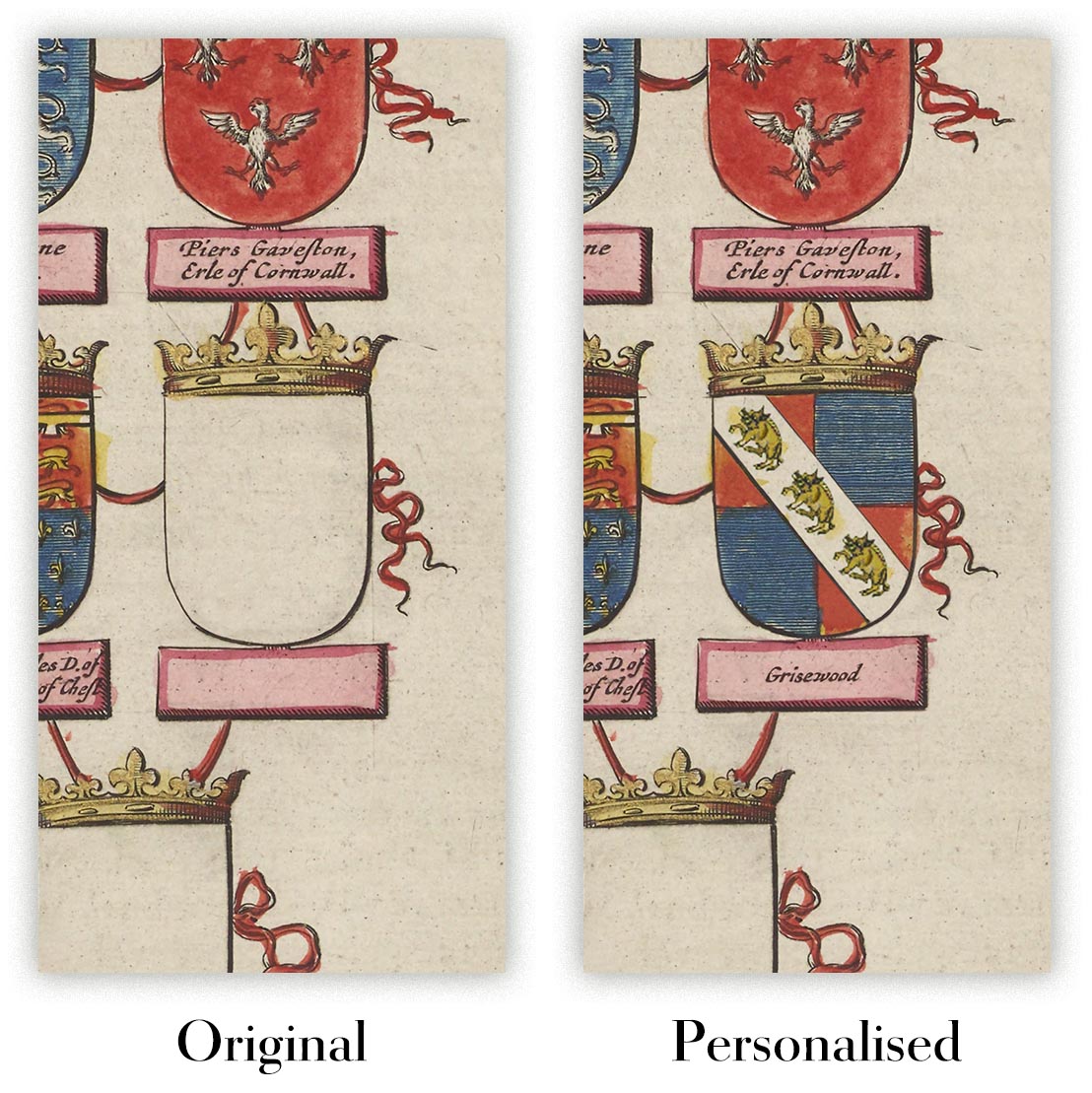
Where personalisation is available, you can add a short title or dedication, or one considered visual detail. See examples of personalised artwork.
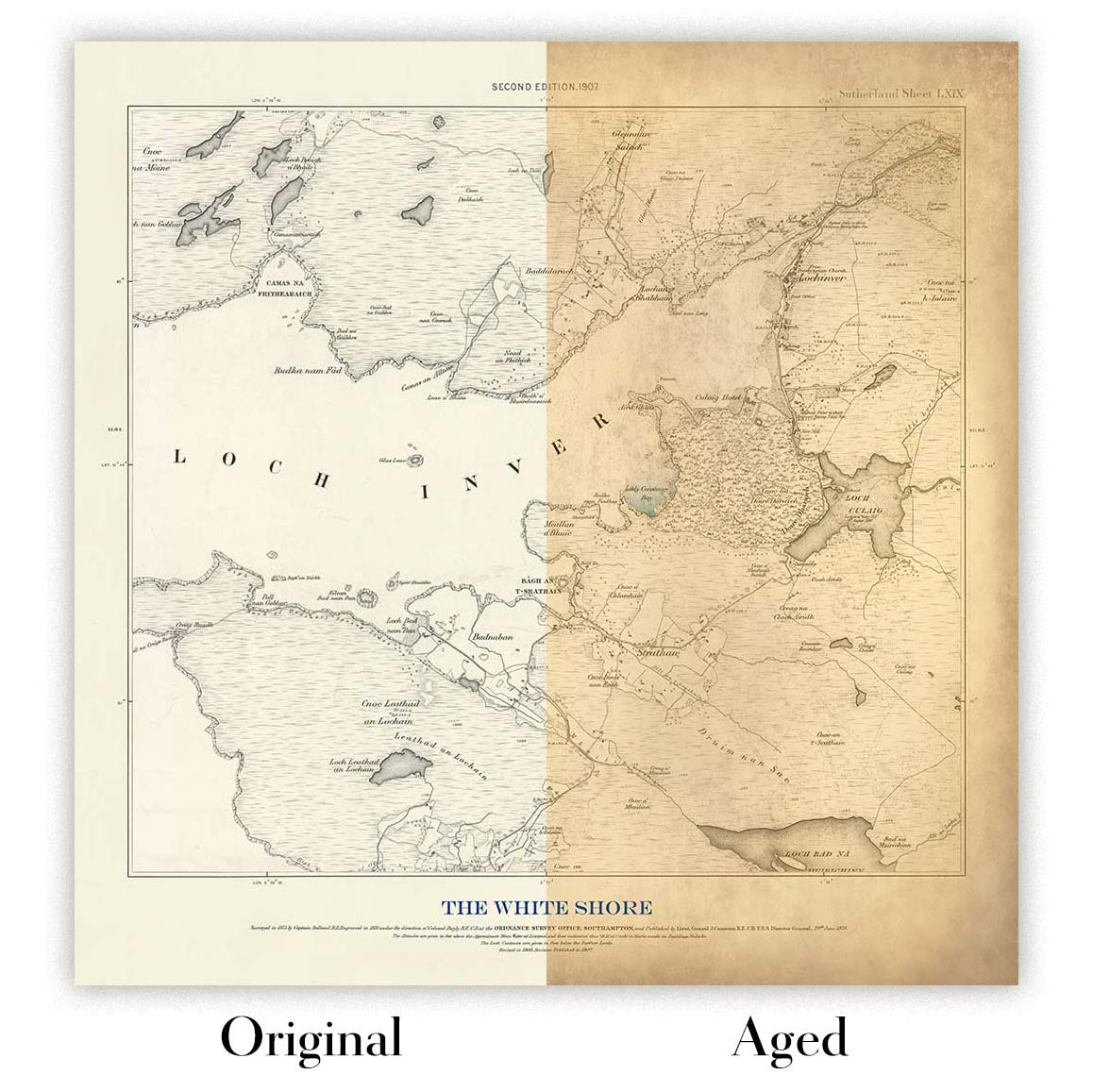
Choose Original to retain the colour and character of the source artwork, or Aged for a warmer, more antique appearance. See examples of our Aged artwork.
Every piece is produced to archival standards using fade-resistant pigment inks on acid-free matte art paper. Choose an art print, framed art print or framed canvas using the finish options above.
Framed art prints use crystal-clear optical acrylic for excellent clarity, lower weight and safer delivery than glass. Each piece arrives professionally framed and ready to hang.
Selected artworks can be produced at statement sizes up to 3 metres (10ft). Custom sizing and specialist framing are also available. If the exact option you need is not listed, contact our workshop.
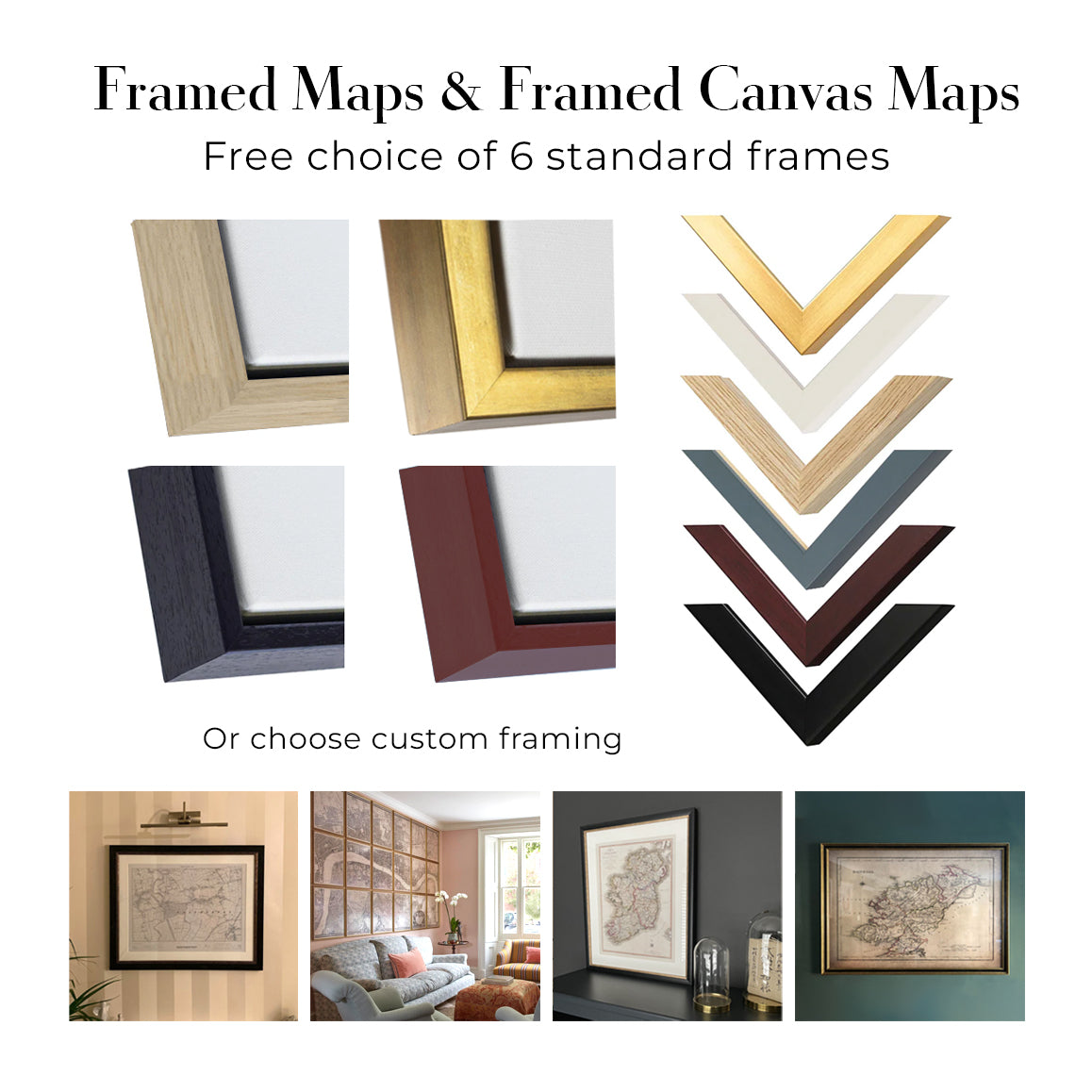
This artwork is also available as a float framed canvas, sometimes known as a shadow gap framed canvas or canvas floater. The work is printed on artist's cotton canvas and then stretched over a handmade box frame. We then "float" the canvas inside a wooden frame, which is available in a range of colours (black, dark brown, oak, antique gold and white). This is a wonderful way to present an art print without glazing in front. See some examples of float framed canvas art and explore the differences between my different finishes.
Jules Chéret’s Vin Mariani, created in 1894, turns an advertisement for coca wine into a whirl of colour and movement. At its centre, an animated woman in a billowing yellow dress raises a glass of vivid red wine, her pose seeming to expand beyond the limits of the composition. Warm yellows, oranges and scarlets flare against a loosely swirling blue ground, while flowers, fluttering fabric and lively curved lines give the poster the air of a spontaneous celebration.
Chéret was a defining figure in the development of the modern French advertising poster and a pioneer of the visual culture associated with the Belle Époque. His lithographic designs helped transform the streets of late nineteenth-century Paris into an open-air gallery in which entertainments, consumer products and fashionable diversions competed for attention. Rather than treating advertising as a purely informational exercise, he united memorable lettering with brilliant colour and expressive figures. Here, Vin Mariani becomes more than a labelled commodity: it is presented through gaiety, elegance and theatrical display, qualities calculated to remain in the memory of a passing urban audience.
A closer look
The woman’s yellow dress provides the composition’s largest and brightest field of colour. Its sweeping folds bend around her body in broad arcs, carrying the eye upwards towards the raised glass in the upper right. Floral embellishments appear around her hair and clothing, with further blossoms gathered near the lower foreground. These smaller decorative accents soften the force of the primary colours while reinforcing the sense of abundance. The figure does not stand formally before the viewer; she twists, reaches and pours, creating an asymmetrical rhythm within the otherwise strongly centred design.
Behind her, the setting dissolves into blue, white and pale atmospheric passages rather than resolving into a clearly defined interior. Indistinct gestures and faint suggestions of other figures contribute to the festive mood without distracting from the central action. Chéret uses this contrast between a sharply legible foreground and a hazier background to establish immediate graphic hierarchy: the woman, wine and flowing costume can be grasped almost at a glance, precisely as a street poster required.
The lettering is similarly direct. “VIN MARIANI” occupies the upper centre in bold, emphatic type, followed by the description “POPULAR FRENCH TONIC WINE”. Further wording along the lower edge promotes the drink in terms of refreshment, health and vitality. The relationship between text and figure is carefully balanced: the headline identifies the product, while the woman’s buoyant movement gives visual form to the claims made beneath it. Even the red of the wine functions as a concentrated accent, standing out against both the golden dress and cool blue surroundings.
Context and significance
Vin Mariani belonged to a late nineteenth-century market in tonic beverages advertised through claims of energy and restoration. Chéret’s approach reflects a wider shift in commercial culture, as recognisable brands increasingly relied upon arresting public imagery rather than dense blocks of explanation. Large lettering establishes the name quickly, but it is the figure’s personality and motion that make the promotion persuasive.
The poster also exemplifies Chéret’s characteristic fusion of art and commerce. His exuberant female figures—often poised somewhere between dancer, reveller and allegorical embodiment of pleasure—became closely associated with the new visibility of illustrated advertising. In Vin Mariani, colour does not merely fill outlined forms; it organises the entire encounter, drawing attention from the golden sweep of the dress to the crimson drink and then into the blue eddies beyond. The result remains compelling as both a record of Belle Époque consumer culture and an assured exercise in graphic theatre.
Choosing the right size and finish
Artwork can feel intimate at smaller sizes and dramatically more architectural at larger ones. Use the room preview, model image and size guide to see how the proportions and scale will work in your space.
If you need an exact size, specialist framing or help planning a larger display, ask our workshop for advice.
The model in the listing images is holding the 18x24in (45x60cm) version of this art print.
Where personalisation is available, you can add a short title or dedication, or one considered visual detail. See examples of personalised artwork.
Choose Original to retain the colour and character of the source artwork, or Aged for a warmer, more antique appearance. See examples of our Aged artwork.
Every piece is produced to archival standards using fade-resistant pigment inks on acid-free matte art paper. Choose an art print, framed art print or framed canvas using the finish options above.
Framed art prints use crystal-clear optical acrylic for excellent clarity, lower weight and safer delivery than glass. Each piece arrives professionally framed and ready to hang.
Selected artworks can be produced at statement sizes up to 3 metres (10ft). Custom sizing and specialist framing are also available. If the exact option you need is not listed, contact our workshop.
This artwork is also available as a float framed canvas, sometimes known as a shadow gap framed canvas or canvas floater. The work is printed on artist's cotton canvas and then stretched over a handmade box frame. We then "float" the canvas inside a wooden frame, which is available in a range of colours (black, dark brown, oak, antique gold and white). This is a wonderful way to present an art print without glazing in front. See some examples of float framed canvas art and explore the differences between my different finishes.
Nombre de nos cartes anciennes et tirages d’art sont choisis comme cadeaux attentionnés pour des maisons, des bureaux, des cabinets de travail et des lieux chargés de sens.
Choisissez une option encadrée pour le cadeau prêt à accrocher le plus simple, ou optez pour un tirage non encadré si le destinataire préfère peut-être choisir son propre cadre.
Nous réalisons les commandes localement dans 24 pays à travers le monde, afin que les cadeaux puissent souvent être produits à proximité du destinataire. Cela permet une livraison plus rapide, un transport plus sûr, et évite les mauvaises surprises liées aux douanes ou aux droits d’importation.
- Nous pouvons livrer directement au destinataire. Aucune information de prix n’est incluse.
- Un message cadeau peut être ajouté à votre commande. Nous l’imprimerons sur une jolie carte.
- Les pièces encadrées arrivent prêtes à accrocher
- Les tirages non encadrés sont soigneusement emballés dans un tube de protection robuste
- Presque toutes les commandes sont réalisées localement, pour des cadeaux plus rapides et plus sûrs
- Les retours sous 90 jours laissent au destinataire le temps de décider
Si vous n’êtes pas certain de votre choix, veuillez nous contacter. Nous pouvons vous aider à choisir la carte, le format, la finition ou l’option de livraison qui conviennent.
Pour la plupart des commandes, le délai de livraison est d'environ 3 jours ouvrables. Les produits personnalisés et sur mesure prennent plus de temps, car je dois faire la personnalisation et vous l'envoyer pour approbation, ce qui prend généralement 1 ou 2 jours.
Veuillez noter que les grandes commandes encadrées prennent généralement plus de temps à réaliser et à livrer.
Si vous avez besoin que votre commande arrive à une date précise, veuillez me contacter avant de passer votre commande afin que nous puissions trouver le meilleur moyen de nous assurer que vous receviez votre commande à temps.
J'imprime et encadre des cartes et des œuvres d'art dans 23 pays à travers le monde. Cela signifie que votre commande sera réalisée localement, ce qui réduit le temps de livraison et garantit qu'elle ne sera pas endommagée pendant le transport. Vous ne paierez jamais de droits de douane ou d'importation, et nous mettrons moins de CO2 dans l'air.
Toutes mes cartes et impressions artistiques sont bien emballées et envoyées dans un tube robuste si non encadrées, ou entourées de mousse si encadrées.
J'essaie d'envoyer toutes les commandes dans les 1 ou 2 jours suivant la réception de votre commande, bien que certains produits (comme les masques, les mugs et les sacs fourre-tout) puissent prendre plus de temps à réaliser.
Si vous choisissez Livraison Express lors du paiement, nous donnerons la priorité à votre commande et l'enverrons par un service de messagerie de 1 jour (Fedex, DHL, UPS, Parcelforce).
La livraison le lendemain est également disponible dans certains pays (États-Unis, Royaume-Uni, Singapour, Émirats Arabes Unis), mais veuillez essayer de commander tôt dans la journée afin que nous puissions l'envoyer à temps.
Lisez mon guide complet sur la livraison et la production locale
Mon cadre standard est un cadre en bois dur noir de style galerie. Il est simple et a un aspect assez moderne. Mon cadre standard mesure environ 20 mm (0,8 po) de large.
J'utilise de l'acrylique super clair (perspex/acrylite) pour le verre du cadre. C'est plus léger et plus sûr que le verre - et cela a meilleur aspect, car la réflexivité est plus faible.
Six couleurs de cadre standard sont disponibles gratuitement (noir, marron foncé, gris foncé, chêne, blanc et or antique). Des encadrements et montages/matelassages personnalisés sont disponibles si vous recherchez autre chose.
La plupart des cartes, œuvres d'art et illustrations sont également disponibles sous forme de toile encadrée. Nous utilisons une toile en coton mate (non brillante), que nous tendons sur un cadre en bois de boîte provenant de sources durables, puis nous 'flottions' la pièce à l'intérieur d'un cadre en bois. Le résultat final est assez beau, et il n'y a pas de vitrage qui gêne.
Tous les cadres sont fournis "prêts à accrocher", avec soit une corde, soit des supports à l'arrière. Les très grands cadres auront des plaques de suspension lourdes et/ou une latte de montage. Si vous avez des questions, veuillez nous contacter.
Voir quelques exemples de mes cartes encadrées et de cartes en toile encadrées.
Alternativement, je peux également fournir de vieilles cartes et œuvres d'art sur toile, sur panneau en mousse, en coton et d'autres matériaux.
Si vous souhaitez encadrer votre carte ou œuvre d'art vous-même, veuillez lire d'abord mon guide des tailles.
Nous travaillons avec des architectes d’intérieur, des établissements hôteliers, des professionnels de l’immobilier, des bureaux et des acheteurs d’entreprise, pour des pièces individuelles comme pour des projets coordonnés de plus grande envergure.
Cette œuvre peut être adaptée à un mur, une pièce ou un projet spécifique, et notre atelier peut vous aider à coordonner les dimensions, le matériau et l’encadrement avant la production.
- Dimensions exactes, grand format et sur mesure
- Encadrement, montage et matériaux alternatifs sur mesure
- Pièces coordonnées pour plusieurs pièces ou emplacements
- Personnalisation de l’œuvre, pour ajuster la couleur et le style de la pièce
- Conseils de notre atelier sur l’œuvre et l’encadrement
- Production locale pour des projets dans le monde entier
Échangez avec notre équipe Trade & Projects au sujet de cette pièce
Chaque impression artistique restaurée commence par l’œuvre originale de l’artiste — jamais par un substitut généré par IA.
Notre atelier de Londres travaille à partir de documents source soigneusement sélectionnés dans des musées, bibliothèques, archives et collections privées. Nous restaurons les dommages liés à l’âge, les couleurs passées et les défauts de reproduction, tout en préservant la composition, les coups de pinceau, le trait, la texture et le caractère d’époque de l’artiste.
Nous n’utilisons pas d’IA générative pour redessiner, réinterpréter ou inventer l’œuvre. La restauration numérique est utilisée uniquement pour récupérer et reproduire l’œuvre originale aussi fidèlement que possible.
Une fois restaurée, l’œuvre maîtresse est préparée dans le format et la finition que vous avez choisis. Votre pièce est ensuite imprimée et, le cas échéant, encadrée à proximité de sa destination de livraison.
Nos impressions d’art giclée utilisent un papier mat d’archivage sans acide de 200 g/m² et des encres pigmentaires résistantes à la décoloration pour une finition riche, digne d’un musée. Les impressions d’art encadrées utilisent un acrylique optique cristallin et arrivent prêtes à être accrochées.
Des toiles encadrées et des éditions spécialisées sur papier coton-rag sont également disponibles. En savoir plus sur nos matériaux et finitions.
Nous restaurons et produisons des cartes et des tirages d’art depuis 1984, et nous garantissons chaque pièce.
Chaque commande est couverte par notre garantie de 10 ans et notre garantie de livraison sans dommage. Si votre pièce arrive endommagée, nous la remplacerons ou la referons gratuitement. Si quoi que ce soit d’autre ne vous donne pas entière satisfaction, contactez notre équipe d’atelier et nous y remédierons rapidement.
Consultez notre politique de retours et de remboursement pour plus de détails.


